Showing posts with label Villains. Show all posts

Wednesday, March 23, 2016

Ant-Man

*Warning: Spoilers are contained in the following post.*

Confession time: I did not think I was going to enjoy Ant-Man.

When I first found out that Marvel was doing an Ant-Man movie, I was pretty excited. Thanks to Avengers: Earth's Mightiest Heroes, I knew who Ant-Man was and I was happy to see him getting a movie.

I got a little less excited when I learned that the movie would actually primarily be about Scott Lang, the second Ant-Man, rather than Hank Pym, the first. But hey, Hank was still in the movie, so I could live with it.

Then I found out that Marvel was not only making it all about Scott, but entirely removing the character of Janet Van Dyne, aka the Wasp. This was the final straw.

To those who don't know why this is a big deal, Janet Van Dyne was a founding member of the Avengers. In fact, Janet Van Dyne named the Avengers. (In more than one continuity!) Janet Van Dyne is the whole reason Hank Pym became a superhero in the first place. And aside from all that, Janet Van Dyne is a really fun character; she's a superhero, and a dang good one, but she's also fun, and humorous, and she's a fashion designer in her free time. (She's also Chinese-American in the Ultimates continuity, which means that Marvel had a wonderful opportunity to include a woman of color in their movie series, and they waved at it as it passed by.)

So yes, I was not happy about Marvel's decision, and as the Ant-Man movie looked pretty boring and generic anyway, I resolved not to watch it.

However, let me tell you from experience: when you are sitting on a plane at four o'clock a.m., having gotten two hours of fitful sleep before giving up on it entirely, none of your carefully thought out reasons for anything will make sense to you. This is how I got roped into finally watching Ant-Man. And...

I actually enjoyed it a lot more than I thought I would.

Let's start with that.

***

So, as it turns out, Ant-Man is actually pretty well-written. It's not as good as Iron Man, which is sort of my benchmark for good writing in the MCU, but it's definitely a lot better than Age of Ultron, which is my benchmark for bad writing in the MCU, because seriously, it was terrible. Ant-Man... well, it had its flaws, but overall it was pretty good. The pacing worked, it had a decent character arc for Scott, and the characters, and their relationships, were all pretty well built up. (With a few notable exceptions, which I'll talk about later.) 

Speaking of the characters, they were... good enough, I suppose. I will always be vaguely bitter about needlessly white movie casts, but as far as acting and characterization went, they were good. That's the interesting thing, I guess: none of the characters in this movie were particularly original or groundbreaking, but they were able avoid being cliché through a combination of good writing and good acting. I thought Evangeline Lilly as Hope Pym and Michael Peña as Luis in particular did a lot with the roles they were given. 

In fact, now that I bring it up, I think the same is true of the plot. Nothing about this movie's plot was particularly original; I think it's safe to say I've seen pretty much every element of this movie somewhere else. But the movie overall manages to avoid seeming generic, which is something I honestly didn't think it would be able to do. 

So overall? I liked how this movie was done. It exceeded my expectations, and I can honestly say I enjoyed it. 

However. 

That having been said, while I liked this movie, there was also a lot I didn't like. And if you think I'm not going to nitpick the heck out of this movie, just because it exceeded my expectations, well. You've got another thing coming, buddy. 

So here we go.

***

To start with, I am still very put out about how Marvel decided to treat Janet Van Dyne in this movie. 

Rather than be included in the movie at all, Janet is killed off to further the story of Hank Pym and his daughter Hope. Her full name isn't even stated anywhere in the movie, and she only appears in one (short) scene, where we don't even see her face. This was annoying enough for me, but it didn't end there. You see, in the movie, Hope Pym--Hank and Janet's daugher--is established and blatantly stated to be, hands down, the most qualified person to steal the volatile technology in question and save the world. However, her father (Hank) is unwilling to put her in danger, so he pulls a random thief guy (Scott) off the street and decides to have her train him to do the heist, so if someone does get hurt, hey, it'll just be that random guy we met a couple days ago. 

(I'll talk more about that a little later.)

This plot decision really, really irks me, because on the surface, yeah! It's a good setup! It works, and the writing supports it! And it leads to an interesting dynamic between the characters! But on a meta-narrative level, it doesn't work, because here we have the only female character in the movie, who is also the most qualified to be the hero. You know what that means? It means that Hope Pym should have been the title character of this movie. It means that the only reason she isn't is because Marvel wanted to make another movie about a mediocre white guy who gets superpowers. It means that this movie has double the sidelining of female characters, and that makes me angry. The movie even acknowledges this, because the mid-credits scene is of Hank finally accepting that his daughter is ready to be a hero and admitting that he's got a prototype Wasp suit ready to be finished! There was literally no reason Marvel couldn't have named this movie The Wasp!

(And as a side note on female characters--and this is more of a nitpick, but still a very annoying one--all of the ants in this movie are female and should have been referred to as such. Sorry, I don't make the rules. They're all girls. Especially Antony. You know why Antony has wings? Because she's a queen. Queens are literally the most female ants ever, and the only ones that have wings. Antony should've been named Antonia. No, I will not get over this.)

My other big problem with this movie is the villain, Darren Cross, aka Yellowjacket. Without getting into how they totally changed around the Yellowjacket suit origin, let me just say I was unsatisfied with how Darren Cross was presented. He's clearly written as having some undefined mental illness, but this is only used to make him seem ~stranger~ and ~scarier~ than the heroes and that irks me, because the MCU has yet to really do anything as far as disabled superheroes (except for Bucky. I guess.) so it's really kinda upsetting that they're playing into the Insane Villain cliché when they didn't have to. 

There were also a couple of jokes that left a bad taste in my mouth, largely because there was no reason to include them in the movie. Okay, so you're gonna make a deportation joke, when Latinos are still fighting stereotypes and blatant hate speech from presidential candidates in the year 2016? Okay. I guess. You're going to write in a throwaway line/joke about "g*psy magic" literally right after Joss Whedon casts a couple of white actors to play canonically Romani characters? Okay. You do you. I guess. 
(For those who don't know, "g*psy" is a slur that's unfortunately still commonly used to refer to Romani people.)
I just... there was literally no reason to put this stuff in the movie. Just because you can, doesn't mean you should, Marvel. 

So... while it's well-written, Ant-Man definitely isn't my favorite Marvel movie to date. Actually I'm kinda disappointed, because it's pretty good. The story is good, the characters are well-written, and there's actually some interesting subtext and considerations in there, so it's a shame that there's also stuff like sidelined female characters and a shoehorned romance. (I almost forgot about that. There is a shoehorned romance in this movie. I hate clumsily shoved in romances already, but this one in particular bugs me a lot, because Scott and Hope actually had a really well-built up and well-written friendship, and the fact that the writers felt the need to shove in a "Oh by the way we're together" scene at the end is disappointing.)

Speaking of that, it's time for a section of the review that I don't normally do. 

***

Here I'm going to (hopefully briefly) talk about some nuances. (This is a tribute to how good the characterization actually is in this movie.)

See, in the movie, Hank Pym, played by Michael Douglas, acts as a Wise Old Mentor character to Scott. He pulls him out of his kinda terrible life--hey, that's another thing. I've never seen a Marvel movie, or hardly any movie, really, that addresses how hard it can be to get a job when you've got a felony on your rap sheet. So, good job with that, at least, Marvel. 

Anyway. Hank Pym is the Wise Old Mentor. He's kinda there to guide Scott, teach Scott, and provide something of a cautionary tale about distancing yourself from your daughter to Scott. However, with the way he's written, there are parts of the movie were he comes off as really freaking shady. 

Like, I'm not even sure if this is what the writers were aiming for, which is what makes it so weird. But if you think about it, it's true. Hank's stated motivation for hiring (hiring? did he offer to pay him?) Scott is that he knows the heist might go down in flames, and he doesn't want his daughter to get hurt if that's the case. However, Hank also knows that Scott also has a daughter who he very much loves, and who loves him. And he knows that Scott, while a criminal, really is trying to turn his life around. (And he knows all this because he's been stalking Scott in some way shape or form, but Hank is rich, so it's not called that.)

So to review, Hank hires a guy who's just trying to pay child support and keep in touch with his daughter, manipulates that guy's attachment to his daughter to convince him to break the law again, all the while knowing full well that if everything doesn't go off without a hitch, this man probably won't see his daughter ever again, one way or the other. 

Yeah. If Hank Pym weren't a Good Guy, he'd definitely be a villain. In fact, why wasn't he the villain? I mean, why use the outdated, overdone Insane Villain cliché when this masterpiece of manipulation was sitting right here in the script?

I guess this is the kind of thing that makes me really upset about the mediocrities in this movie. It's easy to dismiss a movie that's just straight-up all-around terrible. It's a lot more frustrating when the movie has some genuinely good writing and interesting characters, but also has just enough White Male Ridiculousness to be aggravating. And, really, that's exactly what Ant-Man is: a thoroughly mixed bag. It's... probably one of the MCU's better movies. It's definitely better than Avengers: Age of Ultron and it's not as weird as Thor: The Dark World. It's fun. It's light. It's also kinda annoying, because if it had tried--if the writers had tried just a little harder, reworked just a few more things--it could've been really fun and really enjoyable. 

So that's Ant-Man. Better than I expected, but still annoying.

Friday, January 8, 2016

Treasure Island - The Comparison, Part 1

*Warning: Numerous spoilers for Treasure Island are contained in the following post.*

Hi, everyone! I recently finished reading (or, technically, listening to), Treasure Island by Robert Louis Stevenson. I was going to just review it, since it definitely merits some reviewing, but then I decided on something new: I'm going to review Treasure Island, and then compare/contrast it to its Disney movie adaptation, Treasure Planet. 

This was originally going to be all one post, but since that would have been too long, I'm going to review the book and the movie separately, and then do a final post with the bulk of the comparison.

So that's the setup here. Also, rather than go with my standard pro/con format for reviews, I'm going to break this down into sections for plot, characters, and setting, plus some extra thoughts, because I have a lot to say.

And so, without further ado, I give you: Treasure Island.

***

To start, Treasure Island is probably the defining work in the 17th-18th Century Piracy genre. It introduced and codified a lot of the pirate tropes and clichés that are still around today. These include, but are not limited to: disabled pirates (particularly those missing a leg), pirates with parrots, X marks the treasure, treasure maps, and the stereotypical "pirate accent". And it's not for nothing; despite being old, this is a solid book that moves pretty fast and is fairly easy to get through. 

Actually, that brings me right to the first section: Plot. Treasure Island is a very plot-driven novel. Its main conflict is pretty well-known by now: there's a map to a pirate's treasure hoard buried on a secret island, and a competition between good men and pirates to get to that treasure. But I'm going to break it down further.

First off: the only part of this book that really drags on at all is the beginning. I honestly do not believe that we needed to hear as much as we did about Billy Bones. He wasn't that important of a character! Well, in the sense that it was he who gave Jim the map and got the ball rolling, yeah, he was important. But I'll talk more about that in the characters section; the point is, I don't think the beginning of the novel needed to be so drawn out. Frankly, the whole thing with Pew and Black Dog could have been shortened. Black Dog could probably be cut out entirely. But anyway...

Despite the somewhat iffy beginning, once the plot gets moving, it stays moving. It's fairly well paced, too. Stevenson doesn't spend too much time in any one location or on any one event. The twists are well thought-out, and when the story needs to switch points of view, it does.

As a note, I like how the story is presented. It's told in first person, with the pretense being that Jim is writing the story down years later. This takes some tension out of the more suspenseful parts of the story, but I don't necessarily see that as a bad thing, and it enables Stevenson to really build the story-world--having Jim reference other characters, and having Dr. Livesey take up the story to tell certain relevant parts.

My one complaint about the plot--and this sort of overlaps into the characters section--is that some of it seems to be driven only by Jim's impulsiveness. Which isn't necessarily bad--I'm all for impulsive characters, as long as it's a consistent character trait. But... well, I'll talk about this more in the character section. Suffice to say, I don't think that quite so many plot points should've been driven by Jim's sudden recklessness.

Actually that's not true--I have more than one complaint about the plot. My other problem is that in the last, let's say, third of the book, it becomes clearer and clearer that the "good guys" are going to win. The pirates' advantages dip lower and lower until they're all but gone, and while it's an interesting narrative choice, it kinda kills the tension, in the last third.

Other than that, though, I really did like the plot.

Next up: Characters!

The main character, as most people probably know, is Jim Hawkins. I don't think his age is told in the novel; based on what I know, I think he's about twelve or thirteen. Anyway, Jim lives and works at his parents' inn, where he meets retired pirate Billy Bones. Through an extended sequence of events, Jim ends up with Bones's treasure map, which kick-starts the plot.

I get the feeling that Jim is supposed to be sort of impulsive, impetuous character, but he doesn't do a ton of impulsive stuff until really the second half of the novel. This could just be me, but it feels like a bit of an inconsistent character trait. On the upside, though, Jim is definitely not a reactive protagonist. He has an active role in the plot, and his more consistent character traits include being brave, quick-thinking, and honorable, especially as the story goes on.

Next up is Dr. Livesey, a medical doctor who helps finance the trip to look for the treasure, and acquaintance (friend?) of Jim's family. Livesey is level-headed, smart, and very fair-minded. I actually relate to Livesey somewhat--he's both honorable and pragmatic, sort of striking a balance between the very honorable Squire Trelawney and the more pragmatic Captain Smollett. Livesey looks out for Jim a lot, probably feeling responsible for him, and helps mastermind some of the plans that get him and the other good men off of Treasure Island alive.

Livesey takes up the narrative of the story for a few chapters in the second half (chapters 16-18, to be precise). I liked this, as it gives a new dimension to the story, which is mostly told by Jim. I also appreciated that the author brought out Livesey's voice in that section, making it distinct from Jim's.

I already mentioned Squire Trelawney and Captain Smollett above. These two characters are more minor; but they're given a fair amount of characterization, as Jim interacts with both of them quite a bit. Trelawney is less level-headed and street smart than most other characters, but still proves himself competent; Captain Smollett is, for lack of a better term, a hardnose, but still a good man.

And then there's the villain: Long John Silver himself.

Personally, I thought Silver was by far the most interesting character. He's an extremely smart, quick-thinking man, not to mention eloquent, and it's clear that he has a genuine soft spot for Jim. On the other hand, he's more than willing to lie, cheat, and kill to achieve his goals, whatever those happen to be.

As the story goes on, we learn that Silver, a seemingly upright man, was once part of the crew of Captain Flint, the notorious pirate who buried the titular treasure. He's also determined to get that treasure for himself, and willing to go to great lengths to do it. If I remember correctly, the only characters in the book that Silver doesn't harm or attempt to harm are Jim, Ben, and Dr. Livesey. (Although he does threaten Jim. A lot. The way it's set up it looks like most of his threats were lies, but it sorta makes him scarier.)

I really liked Silver as a character and a villain. My only problem with him is that the author doesn't seem sure of how he's trying to present the character at first. You see, at the beginning of the book, Billy Bones warns Jim to be on the lookout for a one-legged seafaring man. Jim, being an impressionable kid, builds this one-legged man into a nightmarish figure in his head. This clues the audience in that the "one-legged seafaring man" is important, scary, and to be on the lookout for such a character later on. But then, when Jim does meet a one-legged man--Silver--he immediately dismisses him, outright telling the audience that such a nice, upstanding man couldn't possibly be the monster Bones was on the lookout for. After all the buildup and fact that Jim actually had nightmares about "the one-legged man", I found this turnaround to be a little sudden.

Then, even as Stevenson tries to convince us that Silver is a pretty good guy, he doesn't show us a ton about it. Sure, Silver is well-liked by the crew and is friends with Jim and everything, but since the book skips over most of the actual voyage, we don't see him and Jim interacting a ton. Thus, when Silver inevitably betrays the good guys and leads a mutiny, the betrayal feels a little hollow. Sure, we heard about him being a friendly person, but we didn't see it. And it doesn't seem to affect Jim much either. Sure, he feels betrayed and all, but he gets over it fairly quickly.

That aside, though, I really did like Silver as a character and as a villain.

***

Alright, so this ended up being a lot longer than I originally thought it would be, so I'm going to cut it off here. In the next post I'll talk about the minor characters and the setting. So until then, adiós! (And if you've read Treasure Island, feel free to chime in with you thoughts in the comments!

Saturday, January 3, 2015

The Hobbit: Battle of the Five Armies

*Warning: The following post contains unmarked spoilers for both book and movie. Viewer discretion is advised.*

So, I recently went to see The Hobbit: Battle of the Five Armies, the final installment in the Hobbit movie trilogy, and Peter Jackson's final movie set in Middle-Earth (at least to date). It was reasonably good, I suppose, and there were things about it I enjoyed; but there were also disappointing moments. I will detail my thoughts (concerning both this movie and all the movies in general) below,

***

The Hobbit: An Unexpected Enjoyment
  • I went into this movie with my expectations vastly lowered from where they were going into The Hobbit: Desolation of Smaug. Therefore, I did manage to enjoy most of it. 
  • Case in point: the portrayal of Thorin slowly losing himself to greed and 'dragon-sickness' after reconquering Erebor. Richard Armitage's acting is amazing, and the moments between him and Bilbo (Martin Freeman) are amazing to watch. I also think the portrayal of the other dwarves' positions was well done--they want to be loyal, because that's what's gotten them this far, but it's increasingly hard to be loyal to someone so selfish. 
  • Bard was, again, a favorite character (though he still doesn't quite match the character I imagined when reading the book). His daughters had less screentime, I think, than in Desolation of Smaug, but his son Bain had some more scenes, and I loved that. 
  • The visuals were amazing, but then, this is Peter Jackson's Middle-Earth we're talking about here, so yeah. 

The Hobbit: Desolation of Jackson
  • As with Desolation of Smaug (and, to an extent, An Unexpected Journey), there were several deviations from the book here, though overall it was rather accurate. According to Middle-Earth history, Azog the Defiler really shouldn't be alive in the time this movie takes place, but that's been a problem since the first movie. Angmar wasn't involved in the book, and neither was Sauron really, and there really weren't all that many orcs present at the Battle of Five Armies, but oh well. Orcs, whattcha gonna do. 
  • My biggest problem with this movie was probably the death scenes (for Thorin, Fili, and Kili). This kind of ties in with the portrayal of the battle in general, so please forgive me for being a bit long-winded.
    When reading the book, I always imagined the battle as taking place in front of Erebor, and only in front of Erebor. Sure, there was Ravenhill, but that wasn't very far up or far away from the main battle. I definitely didn't envision a cliff that far removed from the battle.
    Consequently, I always imagined Thorin, Fili, and Kili going down in battle together. Perhaps Thorin would fall, Fili and Kili would swoop to defend their uncle, and they would all die together. Or Fili and Kili would die trying to protect each other, because they're brothers, they've been together forever, and there is nothing they would not do to protect each other.
    But this is not how things happened in the movie.
    To make a long story short, Thorin, Fili, and Kili (along with Dwalin) leave the main battle and head up Ravenhill (or shall I say, Ravencliff) to try and kill the orcs' leader(s). Fili and Kili get sent out scouting, and then are surrounded when orcish reinforcements arrive. They get separated, and then they and Thorin are essentially picked off one by one.
    What the ever-loving fudge, Peter Jackson? I mean, come on! Fili didn't even get a chance to fight before the orcs killed him! And sure, Kili saw him die and tried to have a roaring rampage of revenge and stuff. But come on, they've been this heartwarming pair since the first movie and you're not even going to let them die together? That aside, you're not even going to let Fili, heir to the throne of Erebor and Thorin Oakenshield's nephew, have a fighting chance before he dies?
  • And then naturally Tauriel shows up. Look, I'm sorry about this, Tauriel, I really am. I wanted to like you. I overlooked your less-than-original relationships with Kili and Legolas all through Desolation of Smaug. I reveled in your action scenes and tried to forget what I didn't like about you. But after that death scene with Kili and Thranduil, I am done. 
    (See? Peter Jackson can't even get me to like a character that I wanted to like.)
  • Finally, I feel like the titular battle was far too drawn out. I get that it was an integral part of the movie and junk, and sure the action was fun to watch, but eventually it gets to the point where you're just wondering when it's going to end. 
The Hobbit: There and Back Again
  • I'm... not really sure how to feel about the Hobbit movie trilogy. On the one hand, there are--were--things I wanted to see in movie format. I was excited about the scene at the beginning of Desolation of Smaug, where Thorin and Gandalf first meet. I was happy to see all thirteen of the dwarves in the company fleshed out and represented. And of course, the visual shots are amazing, the action is fun to watch, and there's a decent bit of humor here and there too. 
  • But then there are the downsides. And there are quite a few downsides--most likely enough to outweigh the good.
    To begin with, there are the chronological errors. My biggest problem with the series at this point is that Azog the Defiler is still alive. According to Middle-Earth history, Azog was killed at the Battle of Anulzibzar Moria by Dain, Thorin's cousin. Azog's son Bolg--who also appears in the movie trilogy--was the one who spearheaded the orcish attacks, because Azog was, y'know, dead at the time. So here we have Peter Jackson messing up history on two accounts--one, Azog should've died at Moria, and two, it should've been Dain that killed him.
  • The whole Necromancer/Sauron subplot--which I have complained about before--was not, as I originally thought, wholly fabricated by Jackson. The White Council did, in fact, drive Sauron out of Dol Guldor and into the Mordor area, in the same year that Erebor was retaken. However, this doesn't mean I'm willing to let the matter pass. I do not think that such a storyline should have been included in the Hobbit movies, particularly when it had nothing to do with any of the main characters. The only thread connecting that story to the main one was Radaghast, and it was a tenuous thread indeed--since Radaghast wasn't involved in The Hobbit to begin with. 
  • My final main point about this series was Tauriel. As stated above, I wanted to like Tauriel. I really did. But with all that happened in the movies, I couldn't. I'm not sure if it was the screenwriter's fault, or Mr. Jackson's, or both, but I just don't feel like Tauriel brought anything new to the table in terms of... well, anything. Yes, she was action-y. So was literally everybody else. Yes, she provided romance. I wasn't particularly looking for romance in these movies, not gonna lie. And really, when it comes down to it, I just didn't feel too much personality from Tauriel. Which is a shame, because I wanted to like her. 

Conclusion

Well, this concludes my reviews of the Hobbit trilogy (much as Battle of the Five Armies concluded Jackson's Tolkien movies). We've been through the good, the bad, and the ugly, and if you've stayed with me this far, thank you. I appreciate that. 

Ah, well. I'd better not get too sentimental. I've still got plenty of things to obsess over and talk about on my blog. And with school coming up fast (faster than I'd like), there's that, too. 

So. I'm giving the Hobbit trilogy three stars out of five, for the sake of things. 


And that's the end of that. 

Tuesday, February 4, 2014

What Not To Do


Or, Fictional Stuff that Really Ticks Me Off.

***

Well, I wanted to start a series of reviews for books and movies I like, but since I'm on vacation that'll have to wait. So instead, you lovely people get a rant.
Also, I'm on my tablet, so feel free to point out any typos you see.
Anyway. On we go. (Links will be provided when appropriate.)

1) Female warriors with waist-length hair.
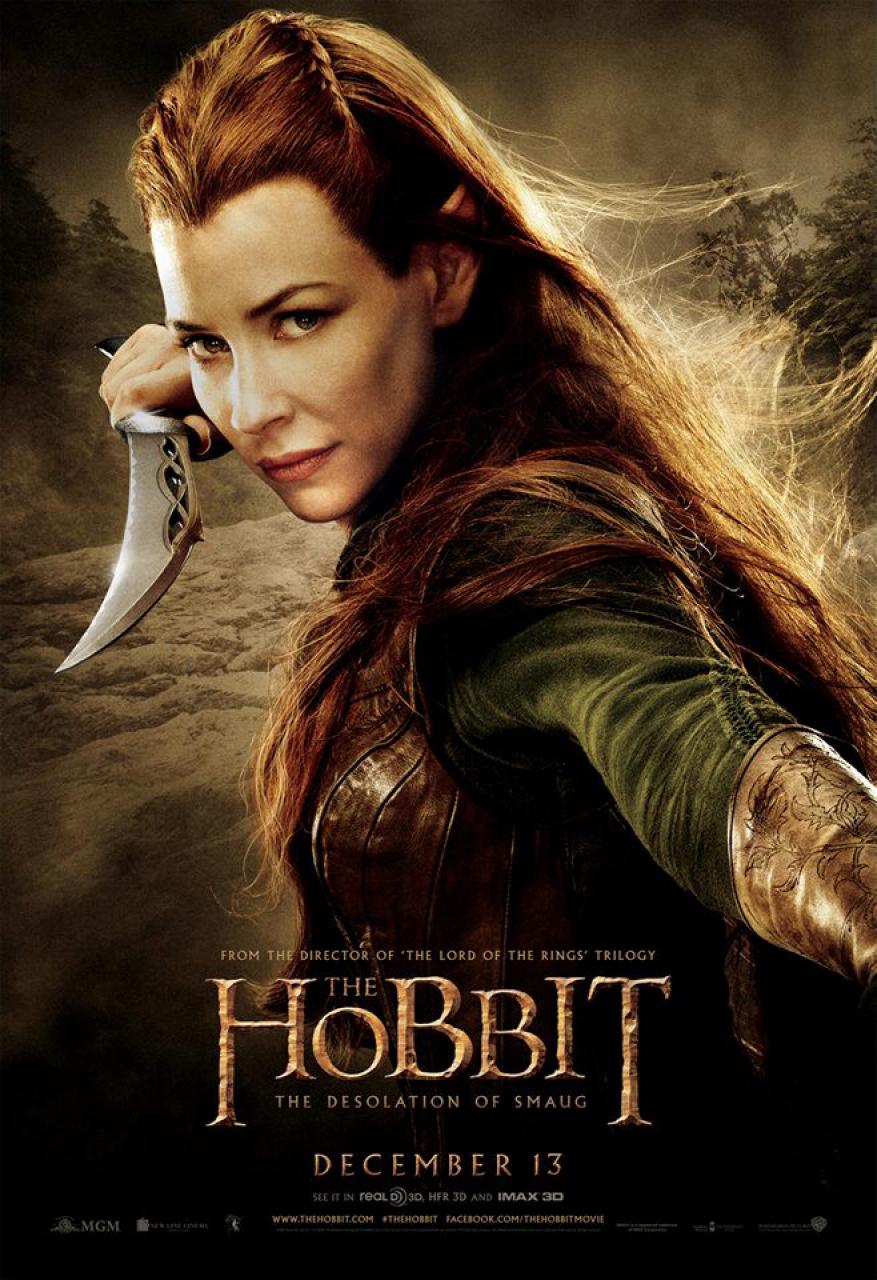
Tauriel as she appears in Peter Jackson's
The Hobbit: Desolation of Smaug
Natasha Romanoff/Black Widow,
as seen in The Avengers: Earth's Mightiest Heroes
This one is first because it really bothers me.

To start, I'm going to say a few things about myself. I'm a girl, so my hair is long but not really long. A few inches past my shoulders, at the longest. I keep it in a ponytail 90% of the time because it gets in the way if I keep it down. If I happen to be playing a sport or running around for some reason,  I'll definitely put it up, or even braid it.

So tell me: where is the logic in having loose waist-length hair if you're consistently going to be in a high-risk combat situation?

Answer: there isn't any. Hair that long could very easily get tangled, pulled, yanked out, caught on something, etc. Ever heard the story of Absalom? In case you haven't, he died because his long hair got caught on a tree branch, allowing him to be overtaken and killed.

Killed.

My Solution: Braid. Your. Hair. You want to look attractive and actiony? Well, that's asking for a lot, but that's a different blog. The point is, braid your hair. You get to keep it, and as a bonus it won't endanger you by getting caught so easily.

2) Gamma radiation is not a one-way ticket to super powers.

"That much gamma exposure should've killed you."
–Tony Stark on Bruce Banner's transformation into the Hulk (The Avengers, 2012)

This one came up because of two episodes the Avengers: Earth's Mightiest Heroes series. The basic premise is this: a super-intelligent supervillain plots to take over the world (yawn) by enveloping the entire planet in a dome of gamma radiation, thus turning everyone inside into monsters.

Well, hate to break it to ya, Mr. "Leader" (I'm not kidding. That's his name.), but that would just kill everyone. Really. It would only be you and all those other weirdos from the specialized gamma radiation prison. Because you see, the sad reality is this: gamma radiation doesn't really turn people into monsters. It just... kills them.

I can hear the skeptics now. But you don't have any problem with the Hulk, and HE'S a gamma monster! Explain that one!

Alright, I will.

The thing is, Bruce Banner is one person. One person out of―I don't know―7 trillion people? And I'm willing to believe that that one person might have a specific genetic anomaly that might coincide with a specific level of gamma radiation to create the Hulk.

I am not willing to believe that it'll work for everyone.

My Solution: Um... I got nothing. Just don't use this backstory more than once, I guess.

3) Is it just me, or are humans the least developed, least advanced species ever to exist?

This one I'm dividing into fantasy and sci-fi, since it applies to both.

Fantasy:
Here you have elves (in tune with nature, awesome fighters, or both), dwarves (long-lived, sometimes with earth powers or metal-working powers to boot), dragons (They can breathe fire. 'Nuff said.), and any other fantasy creature you might want (including but not limited to: fairies, gnomes, orcs, hobbits, and shapeshifters). Whichever way you go, you've almost always got creatures that are more powerful, more long-lived, and generally all-around cooler.

Sci-Fi:
There tends to be more freedom of imagination here, but the basics are the same―nonhumans have longevity, six or seven senses, two brains, the ability to regenerate limbs, etc. Whereas humans are just... humans. Additionally, any extraterrestrials usually have technology that blows ours out of the water. 

Now, if you'll notice, the only thing all these fictional species tend to have in common is that they're all, to some degree, better than humans.

Now, I can see where the writers are coming from from their standpoint―if I'm going to use a nonhuman I might as well make them cool, and also different enough to be called nonhuman. But from a fictional standpoint, this is downright embarrassing. Because basically, if you're a human, you're automatically at a disadvantage.

My Solution: Either give the humans some unique abilities of their own, or limit the elves/dragons/shapeshifters/whatever.

4) Contrary to popular belief, it can be extremely hard to learn a new language.

The most egregious offender I know of for this one is probably Eragon. Not only did the titular protagonist learn to read in a week, he also learned a magical second language with minimal fuss or difficulty.

That is not the way things work, ladies and gentlemen.

I'm currently five months into a study of Latin, and I am no conversationalist in that tongue. I have a long way to go. Additionally, I'm in my early teens, and as far as I know my ability to learn a language is already declining. The protagonist of Eragon is two years older than me.

My Solution: For the love of StarClan, be realistic about these things. Don't make it easy, because it's not.

5) There is a thin line between "letting your heroes get off scot free" and "using every other character to blame the heroes for the collateral damage".

For that matter, there's also a line between "having everyone shower your heroes with praise" and "having everyone ignore the heroes... even after they've saved the world".

This is something My Little Pony: Friendship is Magic tends to err in. The Mane Six have saved the world three times (four if you count the Equestia Girls movie, which I don't). Yet we see in multiple episodes that no one seems to know who they are.

Superhero movies also tend to mess up with this. One of the things I like about the 2012 Avengers movie is that it shows a healthy balance here. Sure, some people are asking questions and wondering why the Avengers had to destroy half of New York in their battle. But others are thankful and frankly that's refreshing.

Actually, this leads me to another point...

6) Slandering the guy who can warp the fabric of atomic energy is a BAD IDEA.

Sure, some heroes will do the right thing and keep on saving people, even when they get no respect in return. Sure, some heroes will put up with all the verbal abuse. Some, on the other hand, wouldn't and won't.

Think about it, Mr. Outspoken Newspaper Editor. Do you really want a world where Generic-Man decides to quit his job because he can't catch a break? Do you really want some savvy villain to take advantage of your lies?

Heck, if I were a superhero getting razzed by the local newspaper, I might take a stroll over there and give 'em a piece of my mind. I might even fry some stuff. Sure, Spiderman and Captain America might put up with it, but I'll bet you Iron Man and Thor wouldn't.

My Solution: You don't need to eradicate J. Jonah Jameson and his ilk. They need scapegoats. I get it. That's always been a problem. But please, at least show the people who do care and are thankful. I know they exist, so give them a voice. (This also applies to #5.)

***

And there you have it. Some of the things that majorly bother me, and how they can be avoided. Next blog will be a review, I promise.

A Short PSA: Thanks to a quick bit of tinkering, anonymous comments are now enabled, meaning you can comment without needing a Google account. Just thought I'd mention it.

Monday, May 6, 2013

The Many Faces of Evil

Before I start in on this, please just note that this post probably isn't going to be as dark as the title may imply. Just bear with me for a moment and you'll find out why I called it this.

To start, has anyone heard of Jim Weiss? Anyone? (Rhetorical question.) Well, in case you haven't, Jim Weiss is a narrator, among other things (I think). He narrated The Story of the World and has a number of re-told stories on audio. During an IDEA curriculum fair here in Alaska, we had the privilege of getting to hear him speak on a topic that I was very excited about: villains, both in real life and in stories.

One of the things I liked about the talk was that Mr. Weiss made several references to Lord of the Rings. This having been said, he started off with what may be the most well-known type of villain: the Dark Lord uber-evil over-arching totally bad supervillain. And of course, he used a well-known example: Lord Sauron from LotR.

Sauron is obviously the over-arching villain of the trilogy. He created the One Ring, and the whole problem is that he now wants it back, for the purpose of destroying/enslaving/taking over the world.
[Insert totally off-topic rant about how Isildur is a complete jerk/idiot for not destroying the Ring when he had the chance here]. So we have Sauron, the supervillain.

But there is something interesting about Sauron that you will notice (at least once it's pointed out to you). J. R. R. Tolkien never actually shows us Sauron. We see Sauron's minions all the time, and we see what they're doing to Middle-Earth. We even know what Sauron looks like. So we know he's real, very real, and yet we never actually see him. 

Now the movies may have ruined this effect by physically showing us Sauron more than once. But in the books, this is very well-preserved.

The Warriors equivalent to this type of villain would be Tigerstar. In the Wingfeather Saga, it's Gnag the Nameless (to a very similar extent, in fact). In Harry Potter, the main villain is obviously Voldemort. And then there's Chancellor/Emperor Palpatine of Star Wars. The point is, most stories have a general over-arching villain.

Then there is the next type of villain. The suave, smooth-talking villain that promises he'll give you whatever you want... if you'll just do x for him. The way Mr. Weiss actually illustrated this is by using the example of Satan.

Satan, Satan himself, would fall into the category of the over-arching supervillain. We all pretty much know this. But what about Satan's alter ego Lucifer?

Lucifer, to answer my own rhetorical question, would qualify as the smooth-talking villain described above. He doesn't appear blatantly threatening--far from it, in fact. But he very insidious and very dangerous.

The character Sol from Warriors definitely qualifies as this type of villain. He is very smooth-talking and is frequently forgiven by characters that he wrongs. Yet he is a villain. Actually, this deceptive tactic of his is quite frustrating. The characters frequently see him as non-threatening, when most of the time he's behaving in a way that makes you want to drop-kick him right out of the story.

Another example I can think of is Grima Wormtongue from LotR. It's obvious--especially in the movie--that Grima is a lying creep, but the only person who tries to address this is banished, and no one else tries to resolve the matter until Gandalf shows up.

Another example is Semiramis from the series Dragons in Our Midst. Semiramis is the mother of a one of the villains, and she is a villain... I think. Seriously, half the reason I hate her so much is because it's been literally impossible for me to figure out which side Semiramis is on. First, she's helping  her son take over the world... but then he's brutally mutilated by the other bad guy, so she goes over to the good side and helps save a young girl's life. She even tells the good guys how to get around the bad guys' scheme... but wait, her 'solution' was really just part of the plan all along! Hah! She's a bad guy! Wait, hang on, no, she still hates the real bad guy, she's just trying to get what she can out of it too. No, she's a bad guy, she's trying to kidnap Bonnie. Oh wait, no, she's only helping her son, and now she's helping out the protagonist... Wait! She just kidnapped someone! Oh, wait, no... ARGH. See what I mean?

I'm sure there are many other villains who fall into this category, but I can't currently think of any, so I'll leave it at that and move on to the next category.

This third type of villain is perhaps the worst of them all. Mostly due to the fact that he is rarely recognized as a true villain. This is the villain who is evil, unfalteringly evil, and yet he looks just like one of us. He could be one of us. He was one of us. But he chose to be evil.

This type of villain is very insidious, because they are so easy to pass up. They look normal, and usually act normal. There's nothing to suspect.

Or is there?

In other cases, this villain was originally a good guy/on the good guys' side/neutral. But he became a villain, and now he's in prime position to betray the good guys as soon as their backs are turned...

Do you now see why I occasionally yell at my books?

I'll use Lord of the Rings as an example for this one. Take Boromir. He begins lusting after the One Ring early on, and we see this when he suggests that the Ring be used for good (which is completely impossible, btw). From that point on, we slowly begin seeing Boromir's lust as it grows, up until the point where he threatens Frodo in an attempt to get the Ring. My point here, however, is that originally, Boromir's excuse for wanting the Ring was more or less "I'm going to use the Ring for good. I'm going to use it to save my people." The same with Denethor, in fact. But neither of these characters lived to see the end of the war.

Coincidence? I think NOT!

Ahem...
A fourth category of villain, which seems to be  fairly new, is demonstrated in the popular series The Hunger Games. What is this type of villain, you ask?

The system.

In Hunger Games, the system is the spider that sits at the center of the web. The system is what's brought about everything: Panem, the Districts, the Hunger Games, and the vicious cycle everyone lives in. To triumph, the rebels have to defeat the system and start from scratch. It's the same (at least I think it is) in 1984 (I say I think so because I've never actually read it).

As Mr. Weiss pointed out in his talk, this new villain known as 'the system' may stem from the growing amount of conspiracy theories today, which it turn may come from our desire to know why things happen. Why was President Kennedy assassinated? Who did it? Was it just one person, or were there more?

We may never know the answers...

In conclusion, there is more than one type of villain to be seen--both in stories and in life. There is more than one road to evil... which is why it pays to read stories. :-D

So what are your thoughts on villains in stories? What about villains in real life? Please tell me!