Showing posts with label The Hobbit: An Unexpected Journey. Show all posts

Saturday, January 3, 2015

The Hobbit: Battle of the Five Armies

*Warning: The following post contains unmarked spoilers for both book and movie. Viewer discretion is advised.*

So, I recently went to see The Hobbit: Battle of the Five Armies, the final installment in the Hobbit movie trilogy, and Peter Jackson's final movie set in Middle-Earth (at least to date). It was reasonably good, I suppose, and there were things about it I enjoyed; but there were also disappointing moments. I will detail my thoughts (concerning both this movie and all the movies in general) below,

***

The Hobbit: An Unexpected Enjoyment
  • I went into this movie with my expectations vastly lowered from where they were going into The Hobbit: Desolation of Smaug. Therefore, I did manage to enjoy most of it. 
  • Case in point: the portrayal of Thorin slowly losing himself to greed and 'dragon-sickness' after reconquering Erebor. Richard Armitage's acting is amazing, and the moments between him and Bilbo (Martin Freeman) are amazing to watch. I also think the portrayal of the other dwarves' positions was well done--they want to be loyal, because that's what's gotten them this far, but it's increasingly hard to be loyal to someone so selfish. 
  • Bard was, again, a favorite character (though he still doesn't quite match the character I imagined when reading the book). His daughters had less screentime, I think, than in Desolation of Smaug, but his son Bain had some more scenes, and I loved that. 
  • The visuals were amazing, but then, this is Peter Jackson's Middle-Earth we're talking about here, so yeah. 

The Hobbit: Desolation of Jackson
  • As with Desolation of Smaug (and, to an extent, An Unexpected Journey), there were several deviations from the book here, though overall it was rather accurate. According to Middle-Earth history, Azog the Defiler really shouldn't be alive in the time this movie takes place, but that's been a problem since the first movie. Angmar wasn't involved in the book, and neither was Sauron really, and there really weren't all that many orcs present at the Battle of Five Armies, but oh well. Orcs, whattcha gonna do. 
  • My biggest problem with this movie was probably the death scenes (for Thorin, Fili, and Kili). This kind of ties in with the portrayal of the battle in general, so please forgive me for being a bit long-winded.
    When reading the book, I always imagined the battle as taking place in front of Erebor, and only in front of Erebor. Sure, there was Ravenhill, but that wasn't very far up or far away from the main battle. I definitely didn't envision a cliff that far removed from the battle.
    Consequently, I always imagined Thorin, Fili, and Kili going down in battle together. Perhaps Thorin would fall, Fili and Kili would swoop to defend their uncle, and they would all die together. Or Fili and Kili would die trying to protect each other, because they're brothers, they've been together forever, and there is nothing they would not do to protect each other.
    But this is not how things happened in the movie.
    To make a long story short, Thorin, Fili, and Kili (along with Dwalin) leave the main battle and head up Ravenhill (or shall I say, Ravencliff) to try and kill the orcs' leader(s). Fili and Kili get sent out scouting, and then are surrounded when orcish reinforcements arrive. They get separated, and then they and Thorin are essentially picked off one by one.
    What the ever-loving fudge, Peter Jackson? I mean, come on! Fili didn't even get a chance to fight before the orcs killed him! And sure, Kili saw him die and tried to have a roaring rampage of revenge and stuff. But come on, they've been this heartwarming pair since the first movie and you're not even going to let them die together? That aside, you're not even going to let Fili, heir to the throne of Erebor and Thorin Oakenshield's nephew, have a fighting chance before he dies?
  • And then naturally Tauriel shows up. Look, I'm sorry about this, Tauriel, I really am. I wanted to like you. I overlooked your less-than-original relationships with Kili and Legolas all through Desolation of Smaug. I reveled in your action scenes and tried to forget what I didn't like about you. But after that death scene with Kili and Thranduil, I am done. 
    (See? Peter Jackson can't even get me to like a character that I wanted to like.)
  • Finally, I feel like the titular battle was far too drawn out. I get that it was an integral part of the movie and junk, and sure the action was fun to watch, but eventually it gets to the point where you're just wondering when it's going to end. 
The Hobbit: There and Back Again
  • I'm... not really sure how to feel about the Hobbit movie trilogy. On the one hand, there are--were--things I wanted to see in movie format. I was excited about the scene at the beginning of Desolation of Smaug, where Thorin and Gandalf first meet. I was happy to see all thirteen of the dwarves in the company fleshed out and represented. And of course, the visual shots are amazing, the action is fun to watch, and there's a decent bit of humor here and there too. 
  • But then there are the downsides. And there are quite a few downsides--most likely enough to outweigh the good.
    To begin with, there are the chronological errors. My biggest problem with the series at this point is that Azog the Defiler is still alive. According to Middle-Earth history, Azog was killed at the Battle of Anulzibzar Moria by Dain, Thorin's cousin. Azog's son Bolg--who also appears in the movie trilogy--was the one who spearheaded the orcish attacks, because Azog was, y'know, dead at the time. So here we have Peter Jackson messing up history on two accounts--one, Azog should've died at Moria, and two, it should've been Dain that killed him.
  • The whole Necromancer/Sauron subplot--which I have complained about before--was not, as I originally thought, wholly fabricated by Jackson. The White Council did, in fact, drive Sauron out of Dol Guldor and into the Mordor area, in the same year that Erebor was retaken. However, this doesn't mean I'm willing to let the matter pass. I do not think that such a storyline should have been included in the Hobbit movies, particularly when it had nothing to do with any of the main characters. The only thread connecting that story to the main one was Radaghast, and it was a tenuous thread indeed--since Radaghast wasn't involved in The Hobbit to begin with. 
  • My final main point about this series was Tauriel. As stated above, I wanted to like Tauriel. I really did. But with all that happened in the movies, I couldn't. I'm not sure if it was the screenwriter's fault, or Mr. Jackson's, or both, but I just don't feel like Tauriel brought anything new to the table in terms of... well, anything. Yes, she was action-y. So was literally everybody else. Yes, she provided romance. I wasn't particularly looking for romance in these movies, not gonna lie. And really, when it comes down to it, I just didn't feel too much personality from Tauriel. Which is a shame, because I wanted to like her. 

Conclusion

Well, this concludes my reviews of the Hobbit trilogy (much as Battle of the Five Armies concluded Jackson's Tolkien movies). We've been through the good, the bad, and the ugly, and if you've stayed with me this far, thank you. I appreciate that. 

Ah, well. I'd better not get too sentimental. I've still got plenty of things to obsess over and talk about on my blog. And with school coming up fast (faster than I'd like), there's that, too. 

So. I'm giving the Hobbit trilogy three stars out of five, for the sake of things. 


And that's the end of that. 

Wednesday, January 8, 2014

The Hobbit: Desolation of Smaug

*Warning: The followed blog contains massive spoilers and unearthly amounts of ranting. Viewer discretion is advised.*

Dear Peter Jackson,
I'm writing this letter to express my complaints about your recent film "The Hobbit: Desolation of Smaug". I have many complaints, and hopefully this letter will reveal to you the depths of my disappointment.

As stated, I have many complaints, but I believe I will start with the beginning of the movie.

Your opening scene with Thorin and Gandalf was excellent. Something I looked forward to for a long time. Let it never be said that Desolation of Smaug has a dull opening.

But then came the next scene.

It opened well enough. Bilbo doing surveillance, the dwarves being chased, and so on. But herein lies my first question: we ended The Hobbit: An Unexpected Journey with the dwarves having been rescued by eagles. They were resting, safe, on the Carrock. What happened? Was there a timeskip? If so, why is this not clearer?

Anyway, the dwarves start through the forest, after Gandalf tells them that they're on their way to meet a shapeshifter. Said shapeshifter is nice enough when human, but rather animalistic in bear form. Oh, and it's hit or miss, you might catch him human and you might not, so let's run to his house and hope to high heaven he doesn't catch us on the way.

Oh, and there are orcs. Of course.

So they make it to the house, and apparently Beorn (the shapeshifter) isn't strong enough to break down his own doors.

Even in bear form.

So the dwarves get some much-needed rest. A bit later Beorn comes in in human form and serves breakfast... as he tells the tale of how he is the last shapeshifter, that they were all killed eventually by The Necromancer.

Dear Peter Jackson: What the heck? In the book Beorn's origins were speculated on, but never really explored. And then I see you spinning all this nonsense about a race of skinchangers that were captured when goblins and orcs came from the north. And then torture.

I don't think anyone really wanted breakfast after that little story.

Anyway. Moving on.

So Beorn and Gandalf warn the dwarves about the Mirkwood, yadda yadda yadda. They go to Mirkwood... and Gandalf discovers a mysterious sign that somehow portends evil. So his decision not to join the dwarves in Mirkwood is split-second, not premeditated.

Book deviation count: 5

Now, I'll consider what happens next a timeskip for your sake. The dwarves start well enough, but then lose the path and start wacking out. Illusion, mind games, and such.

In the book they deliberately left the path out of hunger, not madness. Book deviation count: 6

And then spiders. Bilbo is considerably awesomer than he was in the book. Dwarves are considerably stronger than they were in the book. A nice, book-oriented scene is ruined thanks to spiders.

And then the wood elves show up, and we get a first glance of Tauriel, much-famed female wood elf. And I must admit, she's awesome.

Except for the fact that she shows up... to save Kili.

Ordinarily I would rejoice at this. Female warrior and favorite dwarf together in one scene! But not so. And we shall see why... soon enough.

Anyway, the dwarves are marched to the wood elf palace and locked up. Some rather flirtatious dialogue is had between Kili and Tauriel. And then we cut to Thorin and Thranduil.

Admittedly, I was waiting for this. A scene I so wanted to happen. And at last, something goes right: Thorin starts yelling at Thranduil for his betrayal (if that's what you want to call it) that we saw in the first movie.

Thranduil retorts that he tried to warn Thorin's grandfather, what happened wasn't his fault, and he has seen things Thorin doesn't even know about--something about dragon fire, I think.

Dear Peter Jackson: What the heck? There's kind of a reason we have skin on our faces, you know. And you know what? I'm done. I really don't care if you can justify it anymore, I'm done. This is not the story we know and love.

But for the sake of possible better bits, I persevere.

Thorin is thrown in jail, possibly to rot, since "One hundred years is the blink of an eye in the life of an elf". Thranduil is dramatic if nothing else.

Thorin tells Balin of the deal Thranduil offered, and how he told Thranduil to go... um...

You know, I don't think there's even a way to translate that nicely, so I think I'm going to move on.

Kili is sitting in his cell, playing with this dark stone that has runes carved in it. Tauriel walks by, inquires, and Kili tells her that the runes will curse any non-dwarvish entity that reads them....

...And then decides that he'd really rather make friends with this nice (not to mention good-looking) elf. So he stops messing with her and they start talking.

While Legolas watches jealously from the shadows.

Book deviation count: 

Just to say, the chatty dialogue is nice enough... but you made your decision about this movie's level of darkness, Pete, and you can't have romance and dark action in the same movie without some very careful handling. This movie wasn't careful enough.

Moving on.

We then flip to the POV of Bilbo, who is sneaking around the elves' palace. He spies on Thranduil from the shadows as said elf king speaks to Tauriel about the giant spiders that are growing bolder.

Towards the end of their chat, Thranduil roundaboutly tells Tauriel that she is not to become romantically involved with his son, because she is basically not high-born enough.

So forbidden romance all 'round. Seriously, I thought this movie would be more original. But no.

Then we see Bilbo in the elves' cellar-rooms, where he discovers that the elves' empty wine barrels will be sent down the river to Laketown. So he steals the keys, lets the dwarves out, and packs them into barrels.

Now, allow me to back up a bit and explain something: back when the dwarves were at Beorn's house, a rather familiar orc by the name of Azog ordered a different orc--Bolg--to take up the hunt for Thorin, thus rehashing a lot of the tension seen in movie one. So this Bolg is hunting the dwarves, and he's about to catch up them via the river-gate.

You can see where this is going.

So the dwarves start down the river, with Bilbo hanging onto the side of one of the barrels, just as the elves discover that they're gone. Bolg and Co. show up and start trying to kill the dwarves. And since dwarves have, in fact, dropped to Enemy #2 since the orcs showed up, a massive orc-vs-elf battle ensues, with the dwarves in the middle of it.

Did this battle have great combat scenes? Yes. Did it have some other good bits? Yes. Did I like it? More or less. Was it in the book? No!

So the dwarves float down the river in the middle of a battle scene. Then they reach the river-gate that will allow them out of the elves' lands--and the elf shuts the portcullis right before being shot by an orc.

Dwarves are trapped as total orc-vs-elf pandemonium reigns. And then... our intrepid hero Kili realizes that he can, in fact, climb up to open the portcullis if he tries, danger and possible consequences be darned.

So he tries.

And he almost makes it, too. But just as he reaches the lever, Bolg takes aim with his bow and...

Now there's an arrow sticking out of Kili's thigh.

Book deviation count: 12

Long story short, the dwarves (including Kili) make their escape, and Thranduil decides to lock down the kingdom upon learning that some great evil has appeared.

Because putting everyone in lockdown always works when the world is at stake.

However, Legolas learns that before the lockdown order was given, Tauriel left the kingdom to go find Kili, after she learned that he was shot with a poisoned arrow. Legolas decides to follow her.

Book deviation count: 15

And then we flip back to the dwarves.

Our heroes have managed to make it out of the woodland realm and are resting on a riverbank. Their new main problem is discussed: they have no way of getting across the lake the river empties into, and Bolg and Co. would easily run them down if they tried to go around.

As this is being talked over, the shot zooms ominously in on Ori, who is innocently dumping water out of his boots.

Then he looks up.

And sees an archer poised at the top of a rock, ready to shoot.

Dear Peter Jackson: What the heck? I'm an avid reader of the book, and I'm pretty sure that's not how the dwarves met Bard. But then again, this movie hasn't exactly been a paragon of adherence so far, so I digress.

Book deviation count: 16

So the dwarves speak with Bard. Balin does his best to sweet-talk their new acquaintance into taking them to Lake-town. Eventually he succeeds, but only because he offered to pay double Bard's usual fare.

So the dwarves go to Lake-town, and Bard smuggles them into his house in a painstaking process that involves fish, latrines, and some mildly invoked threats. I have yet to understand why Alfrid and the Master have such a vendetta against Bard. What has he ever done to them? Exist?

Here I'll stop complaining to make a brief note: I like Bard and his family. I really do. If nothing else, they are the one accomplishment made in this movie. For me, at least.

And then, alas... something more happens.

Bard tries to hold up his end of the deal by securing weapons for the dwarves, but Thorin and Co. suddenly decide to be picky about their weaponry. They want iron weapons, the fact that all iron weapons in Lake-town are under lock and key be darned!

You can see where this is going.

Thorin and Co. decide to... break into the town armory and steal weapons.

Dear Peter Jackson: What the heck?

So they break into the armory and begin stealing weapons. It's actually going quite well. And then Intrepid Hero (aka Kili) comes down the stairs carrying an armload of metal weapons and trying to walk on a wounded,  poisoned leg.

Even worse, when Thorin (Kili's uncle) inquires, Kili claims he's fine, and gets a few more weapons to carry for his trouble.

Guess what happens.

Kili falls down the stairs, dwarves are captured, and Bard discovers that Thorin's appearance means not prosperity but destruction.

Thorin and Co. are marched before the Master, who seems more upset at being woken up than anything else. Before charges can be brought Thorin, being the amazing motivational speaker that he is, announces his identity and manages to convince the people of Lake-town that they will join in the wealth when Erebor is re-taken.

Bard arrives and tries to convince everyone of what he's discovered, but the Master discredits him by pointing out that Bard's ancestor was the one who failed to kill Smaug during the attack on Dale. Thus the dwarves get a proper welcome to Lake-town and there is much rejoicing amongst the townspeople.

A short timeskip is had, and the next we see of the dwarves, they're preparing to leave for Erebor--even though the group is notably lacking in a certain dwarf named Bofur. As the others board the boat, Thorin pulls Kili aside and breaks the news to him: He's not going with them to Erebor.

It's a logical decision--Kili is wounded and would only slow them down when they need to move fast--but it's also a decision that breaks Kili's heart. He and his brother (Fili) grew up on stories of Erebor and now...

Oin volunteers to stay with Kili, since he has healing experience. Fili, angry at his uncle's decision, defies Thorin and also stays behind.

And, of course, we have Bofur, who woke up late and missed the boat.

Dear Peter Jackson: What the heck? That's four dwarves not going with the others, one of whom only stayed behind because he... woke up late. Seriously? You'd better have a really, really good reason for this.

Anyway.

We flip back to Gandalf's POV, and find that he has come to an old, crumbling fortress. With some difficulty he gets in and goes to meet Radagast the Brown in a certain area. Here we learn that "the Nine" are gone, and thus The Necromancer (who is rising in the south Mirkwood area, at Dol Guldor) cannot be a human sorcerer, since "the Nine" only answer to one.

The Necromancer can only be Sauron.

And so Gandalf is forced to choose: rendezvous with the dwarves as he promised, or go to confront The Necromancer before it's too late?

Under some duress from Radagast, he chooses the latter and they set off.

At Dol Guldor, Gandalf sends Radagast to alert Lady Galadriel to what is happening. And then he goes in alone.

He explores a bit and attempts to expose the evil hiding in the fortress. These attempts are mostly futile, and thus he is caught off-guard when none other than Azog the Defiler attacks.

Dear Peter Jackson: What the heck? In case you need reminding, this is the wizard who took out a freaking balrog. The same guy who ended Theoden's possesion in the halls of Meduseld, who came with the rising sun to rescue Helm's Deep.

And he can't take out one orc?

I am done.

So Gandalf manages to keep Azog off his back, though he's nowhere near as good at it as he should be. He tries to escape, but is stopped by The Necromancer himself.

Gandalf casts a light-shield spell similar to the one he used in Moria, against the above-mentioned balrog. It... sort of works... but in the end The Necromancer is stronger and defeats him.

Okay, nothing wrong with that so far. When Sauron was at peak strength, the five wizards of Middle-Earth combined couldn't destroy him. He's at low power right now (as Gandalf handily pointed out earlier), but he should still be a match for a solitary wizard.

But now comes the bad part.

The Necromancer defeats Gandalf and pins him to a wall, using a wind-like force that seems to come with his swirling dark form. But then a figure clad in dark armor comes walking out of the flames, creating the famous eye of fire Sauron is known so well for.

Dear Peter Jackson: What. The. Heck.

As far as I remember, the last time Sauron had enough power to take on a human form like that was... the Second Age.

Even worse, he was only able to manifest himself then because he was at peak power and possessed the Ring.

Gandalf already pointed out that Sauron is currently at low power. So why the heck is he manifesting himself in a form he's only taken once before, at peak power?

Anyway, scene ends with Gandalf dangling over the side of a cliff in some sort of cage, watching in horror as orcs march toward the lonely mountain.

And with that happy thought in mind, we switch back to Thorin and Co.

Back at the Lonely Mountain, the dwarves refuse to wait for Gandalf at the assigned meeting place and strike out to find the hidden door. They do eventually find it, and wait in anticipation as the sun sinks, for the "last light of Durin's Day will shine upon the keyhole", and they need to find the keyhole to get into the mountain.

The sun sets.

Nothing happens.

The dwarves get depressed and make as if to go home, but Bilbo stays around. And as he stand there...

The moon comes out from behind a cloud and illuminates the door in just such a way as to show where the keyhole is.

The dwarves have penetrated Erebor. Finally.

In a way that never happened in the book.

So the dwarves send Bilbo into the treasury, and Balin explains that he's there to find the Arkenstone: a large, white gem that he'll know when he sees it.

Also, not waking the dragon would be a good idea.

And so Bilbo is left, alone, to work his nonexistant magic.

Bilbo sneaks into the treasure-room and searches for a while. But this treasure is huge--about as large as a medium-sized city, I'd say. Searching is all but futile when all the description you've got is "a large white gem".

Then Bilbo inadvertently wakes Smaug, and the two have a passably decent conversation... until Smaug tires of it and begins threatening Bilbo as only dragons can do. He knocks around a bit of the architecture in the treasury, and the resulting noise is heard all the way out at Lake-town.

Bard, being the perceptive, knowledgeable guy that he is, hears the noise and takes his black arrow--the one remaining weapon that can kill a dragon--and hurries to fix it to the dwarf-made bow that lies at the top of the city. Unfortunately, the Master and Alfrid really have it out for Bard now, and he ends up getting arrested while his son, Bain, hides the arrow.

Again, why is Alfrid so out to get Bard? Did Bard outrank him in chess club? Humiliate him in school sports? What happened?

Anyway. While Bard is gone, his house is attacked by--guess who--Bolg and Co. The three unwounded dwarves don't have any weapons, and though they put up a fight it's not looking good for Bard's daughters and Intrepid Hero (aka Kili).

And then, who should show up but Legolas. Closely followed by Forbidden Romance Magnet, aka Tauriel.

The two elves make quick work of the orcs. Legolas leaves to go after the ones that got away, but Tauriel is torn between her duty and her crush. (I refuse to call it 'love'.) Finally she chooses Kili, takes the healing herb Bofur found during the orc attack, and uses it to heal Kili.

And then... okay, I'm going to admit. Out of place though it was, I thought this scene was pretty sweet. Or at least cute.

I mean, come on. At least there wasn't any kissing.

Anway, what happens is this: after being healed by Tauriel (and the poison-curing herb athalas), Kili wakes in a dreamlike state and admits his love for Tauriel, not realizing that the person he's talking to happens to be... Tauriel.

But no outright declarations of love are made on Tauriel's end, so there is yet hope for the sanity of this movie.

Actually, no, there isn't. But the scene was at least decent.

Anyway. Meanwhile, back at the mountain, the dwarves finally go in to help Bilbo. And somehow they conceive what shall henceforth be known as "The Plan to End All Plans".

Or just The Plan for short.

Anyway, the dwarves split up and lead Smaug to the old gold-forges. They trick him into rekindling the fires, and then melt all the gold lying about. Through the power of teamwork and insanely one-sided luck, they all manage to survive stage one of The Plan and then get Smaug to head to one of Erebor's enormous halls. There, Thorin taunts his enemy and then helps break apart an enormous stone mold, revealing a huge golden statue of his grandfather.

It's kind of sad, but I have to admit that that statue was one of this movie's high points.

The statue, which is actually made of molten gold, then melts, drowning Smaug in liquid gold.

But of course this doesn't kill Smaug, because if it did then you, my good Sir Jackson, wouldn't have a third movie to make millions off of. So Smaug breaks out of the gold and flies off to torch Lake-town.

Cue credits.

In conclusion, this movie was utterly disappointing for me. The plot was wildly inadherent to the book, the romance was out-of-place at best, the characters, though interesting, had almost no development whatsoever, and the scriptwriter(s) seemed to have forgotten everything that transpired in the four previous Middle-Earth movies.

To sum up, I will not be viewing "The Hobbit: There and Back Again" until it comes out on DVD, thus depriving you of twenty dollars or so. And, admittedly, I will be much more cautious about sequel films in the future. You have taught me a valuable lesson, Mr. Jackson, bitter though it was.

As a parting note, I believe that this movie can be summed up in a paraphrasing of one of its more "poignant" lines.

"That, my lad... was a flop."

Sincerely,
A Concerned Fan

Tuesday, December 10, 2013

Music Worth Commending

There are probably few things I like more than music (aside from the obvious, of course). A lot of the music I like reminds me of my writing, but even if it doesn't there's still a chance of me liking it. Some of my favorite bands include TobyMac, Owl City, Britt Nicole, and Needtobreathe. But there is one artist that I wish to commend above all the others, and his name is Howard Shore.

We'll see why in a moment. 

Lately, I've been listening to a lot of instrumental music while I do schoolwork. Since tracks from The Hobbit: An Unexpected Journey make up quite a few of my instrumental tracks, I've been listening to those quite a bit. And I've also come to formulate a theory hypothesis: Music cannot convey emotions nearly as well as words and images can. 

Why? Well, to start with, words. Words are probably a lot more "real" than music is, because in this day and age we are surrounded by the written word every day. On this webpage alone are thousands of written words. Any literate person can read this words and formulate their own mental meaning/image/argument/etc. to go along with them. So words are more "real" than music. 

Next up, images. Images are even more "real" than words, probably because most human beings input and process images constantly, day after day. Images can be taken in in a fraction of a second and understood in the next fraction of a second. Images generally have no problem conveying what they want to convey. So images are very "real". 

And that brings us to music. 

Music is abstract. We hear it in a fraction of second, yet what we hear does not immediately convey a message the way words do. This is especially true of orchestral/instrumental pieces. And so it can be a lot harder to use an orchestra to convey emotion. 

Which brings me to a final point. 

The only song that has ever truly, primally, scared me is an orchestral, instrumental piece by Howard Shore. It's called The Hill of Sorcery.

Now, it should be noted that I don't listen to a lot of "scary" music, so maybe that doesn't count. But this piece of music is also the only song out of the 208 songs that I like that evokes any sort of true emotion for me. The runner-up is probably Vanilla Twilight by Owl City. But that has lyrics, and works in conjunction with images from a movie-that-shall-not-be-named to make me sad. So it's not a very close runner up. The Hill of Sorcery has no lyrics and, though it is from a movie, is just as scary on its own as in the scene it goes with. 

And that is why I want to commend Howard Shore. 

(A note: If you just want to hear the scary part of The Hill of Sorcery, skip to 1:41 and listen carefully. To see the scene that goes with it in the movie, go here.)

Sunday, January 13, 2013

The Hobbit: An Unexpected Journey

Hi, everyone!

I've just gotten back from my second time seeing The Hobbit: An Unexpected Journey in theaters! One of my new favorite movies. I love middle-earth...

So, as promised, I will do a review. I'm new at this, so bear with me. And if a few characters butt in along the way, well, it's not my fault. (At least, it's not completely my fault...)

Yes it is. It so is. You're the one letting us--

Ahem. No one saw that, right? Right. You didn't see anything.

So, on with the review...

*****
The movie opens in the Shire. Bilbo, as he appears in the Lord of the Rings movies, is going through some of his things and eventually finds a red leather book, which he takes to his desk and begins to write in. He is apparently narrating this to Frodo, saying that although he told the truth about his 'adventure', he did not tell him the whole thing.
Frodo comes out of the pantry and, after getting the mail, sees what Bilbo is doing. Bilbo sort of snaps at him, telling him that the book isn't ready to be read.
Frodo and Bilbo have a short conversation about Gandalf, and then Frodo runs off, saying he wants to surprise Gandalf.
And cue the opening scene of the Fellowship of the Ring...
But I'm getting off track. Anyways, Bilbo goes on with his narrative, saying that the story begins in a faraway place, the likes of which you won't find anymore in middle-earth.
And cue what is essentially the prologue of the movie. It is explained how there was a mountain called Erebor and that near it was the city of Dale. Dale prospered, and Erebor was ruled by the great Thror, King under the Mountain, greatest of the dwarf-lords. It is mentioned that Thror had a son, Thrain, and a grandson, Thorin.
And all my fellow LOTR/The Hobbit fans know who that is.
Anyway...
Okay, wait. I don't want to give away the entire plot. I think I've said too much already. I'll go onto the technical aspects of the review. E, don't you dare say a word.
Herm, hmmm, yes. I think my new story idea is influencing me. Treebeard, don't you dare say a word. Anyway...
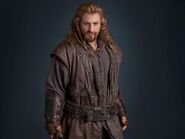
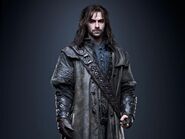
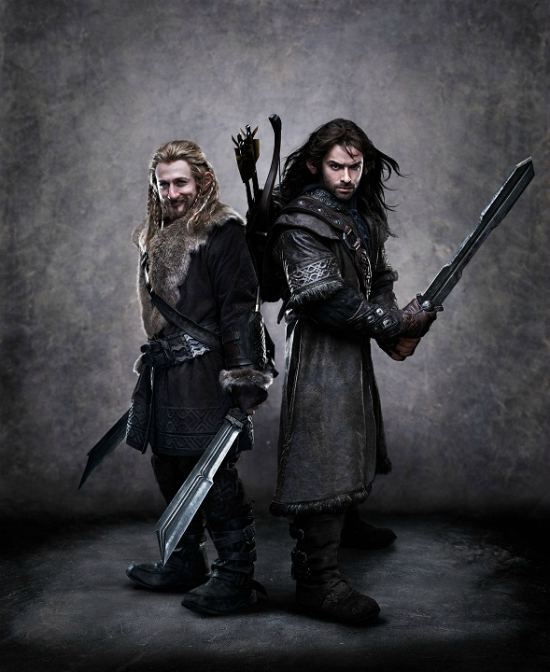
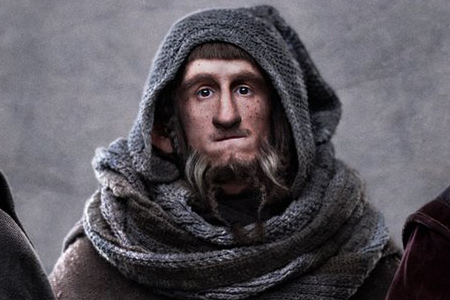
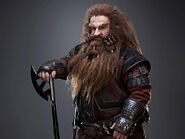
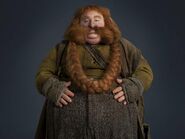
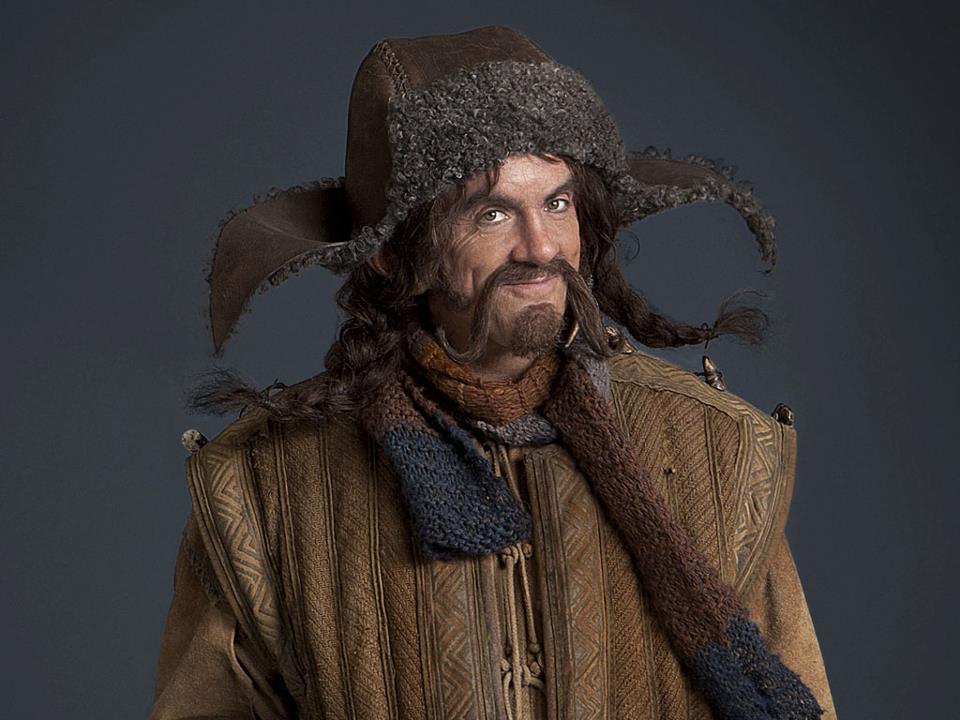
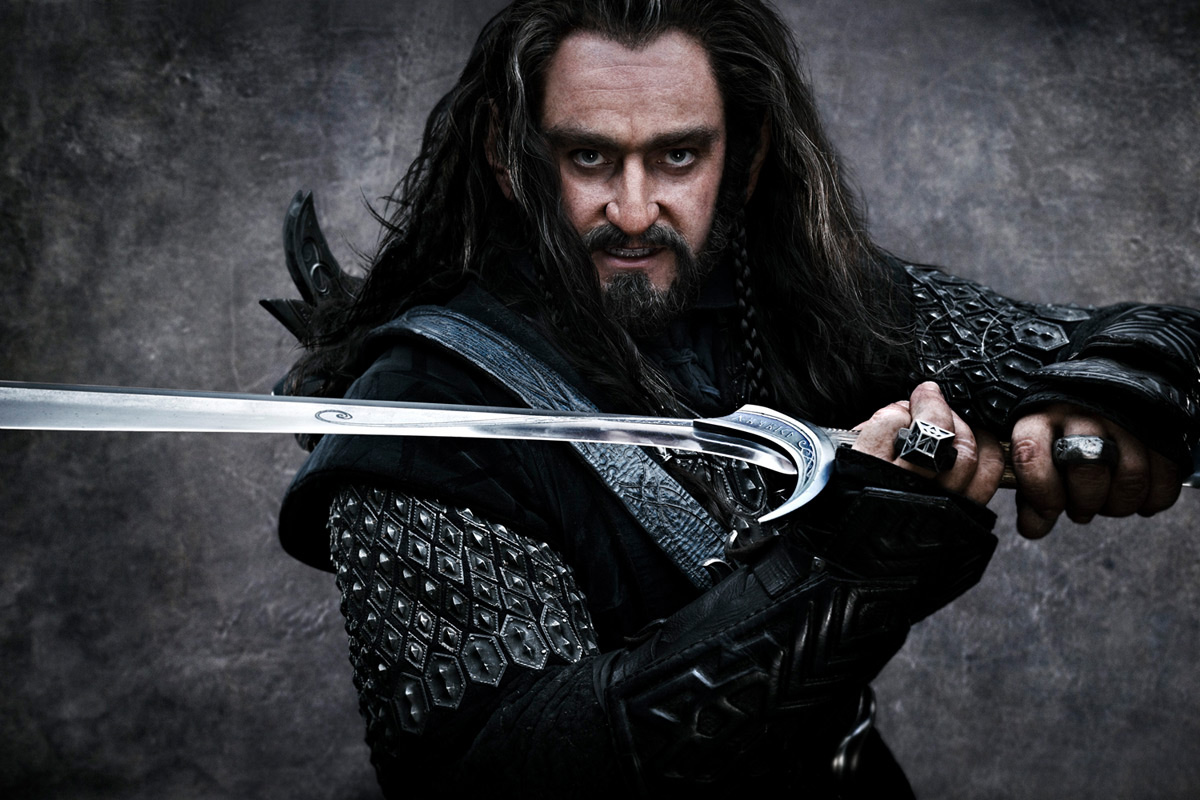
The Hobbit: An Unexpected Journey is a good movie. There are several humorous and/or witty parts, most likely because The Hobbit is more of a children's book than Lord of the Rings is. The filmmakers, in my opinion, did an excellent job of making each of the thirteen dwarves have their own look.

Fili
Fili-- 
Kili
and Kili--
The-Hobbit-Fili-and-Kili
At your service!
The-Hobbit-Promo-Pic-Reveales-The-Dwarf-Bros.
Ori
Gloin, father of Gimli
Bombur

Bofur
ThorinBIG
Thorin Oakenshield--leader of the Dwarves
(And uncle to Fili and Kili)
The score is, of course, simply amazing. A main theme, maybe even more so than the original LOTR theme is the song of Erebor:
Far over the misty mountains cold,
To dungeons deep, and caverns old,
We must away ere break of day,
To seek the pale enchanted gold.

That's the first verse. It goes on, I believe... but anyway, great song, amazing score.
One bone I have to pick with the filmmakers is all of the things they added to the story. For one thing, the prologue I mentioned earlier is probably at least thirty minutes long. All of that wasn't necessary--they could have woven it through the story like it was in the book. Then there's some other things they added--
  • For one thing, we finally meet Radagast the Brown, one of Gandalf's fellow wizards. Radagast prefers the company of animals over men (I know how he feels sometimes), and lives alone in the Mirkwood, which in this version is also known as the Greenwood. Radagast finds out about the giant spiders in the Mirkwood and reports this to Gandalf. They find that this is the fault of... The Necromancer.
For all those non-LOTR/The Hobbit fans out there (you know who you are), The Necromancer is another name for either:
A) The Witch-king of Angmar, Suaron's #1 Ringwraith or
B) Sauron himself. Both are prime villains. 
Now, contrary to popular belief, The Necromancer is actually somewhat involved in The Hobbit. Here is exactly what is said about him in the book:
"Your grandfather," said the wizard slowly and grimly, "gave the map to his son for safety before he went to the mines of Moria. Your father went away to try his luck with the map after your grandfather was killed; and lots of adventures of a most unpleasant sort he had, but he never got near the Mountain. How he got there I don't know, but I found him a prisoner in the dungeons of the Necromancer."
"Whatever were you doing there?" asked Thorin with a shudder, and all the dwarves shivered.
"Never you mind. I was finding things out, as usual; and a nasty dangerous business it was. Even I, Gandalf, only just escaped. I tried to save your father, but it was too late. He was witless and wandering, and had forgotten almost everything except the map and the key."
"We have long ago paid the goblins of Moria," said Thorin; "we must give a thought to the Necromancer."
"Don't be absurd! He is an enemy far beyond the powers of all the dwarves put together, if they could all be collected again from the four corners of the world. The one thing your father wished was for his son to read the map and use the key. The dragon and the Mountain are more than big enough tasks for you!"
So, this having been said, why did the movie makers feel the need to include The Necromancer in the movie?
  • Secondly, there's another subplot added featuring none other than Azog the Defiler, a.k.a. the Pale Orc. Of course, there's another thirty minutes of backstory about this. So, as the story goes, after Smaug the dragon attacked and captured Erebor, the dwarves tried to go to the mines of Moria. Unfortunately, the orcs got there first. A large battle ensues. Azog has sworn to wipe out the line of Durin (that would be Thror, Thrain, and Thorin). Azog beheads Thror, and Thrain goes mad with grief. It is unknown what happened to him. Thorin tries to take revenge and gets his tail whupped, nearly losing an arm. After losing his shield, he uses an oak branch to shield himself from Azog's attacks (hence his name, Thorin Oakenshield). Thorin ends up cutting half of Azog's arm off, and the orc is dragged back into Moria, "mortally" wounded. The dwarves win the day, but their dead number too many to count.
So now, not only do we have a near-pointless subplot involving The Necromancer, but a completely random orc villain is thrown in to boot. Of course, the orcs hunting the dwarves provides a good amount of the action in the movie.

Several other smaller plot points are changed. A few of these are
  1. Galadriel and Saruman showing up at Rivendell while the dwarves are there,
  2. the ponies conveniently bolting when the orcs & wargs (think evil wolves with large heads) show up, instead of being lost in the mountains, and
  3. the dwarves leaving Rivendell on their own, without Elrond's blessing.
All I'm saying is that after a while, it gets annoying.

Overall, The Hobbit: An Unexpected Journey is good, though it doesn't quite live up to my expectations. My score for the movie is: B-. It could have been lower, but the epic battle scenes, amazing CG effects, and numerous humor points help bring the rating up.

Rating: PG-13
Violence: Lots, though most is directed at creatures we don't mind seeing killed. There is a low amount of gore during one scene.
Cursing: None
Sex: None
Other: There are several frightening images, i.e. goblins, trolls, giant spiders, orcs, wargs, and a dragon incinerating everything in sight, though it should be noted that the dragon is never actually fully seen. It is also mentioned that The Necromancer can summon spirits from the dead.

Favorite Quotes:
Bilbo: [Reading contract] Dwarves not responsible for various injuries including but not limited to... laceration... incineration?
Bofur: Oh yes. Dragons can melt the flesh off your bones in the blink of an eye!
Bilbo: [Leans over and begins to take deep breaths] I'm fine. Yes, I'm fine.
Bofur: Think furnace--with wings! Searing heat, a flash of light, and poof, you're nothing but a pile of ashes!
Bilbo: No. [Faints]

{The dwarves have previously been captured by trolls. Half are being roasted (alive) over a fire, and the other half are in sacks.}
Troll: Let's season 'em. We could use some sage--
Bilbo: [Hops up] You're making a big mistake here, you know.
Troll: Huh? Why?
Bilbo: I mean, have you smelled them? You're going to need something a lot stronger than sage to make them taste good.
Troll #2: Make him shut up!
Troll #1: No, no, let 'im talk. What is the secret to cooking dwarf, then?
Bilbo: Well, the secret to cooking dwarf is... um...
Troll: Yes? Yes?
Bilbo: The secret to cooking dwarf is to... to skin them! Yes, to skin them!

{Later during this same scene}
Troll: [Picks up dwarf to eat whole]
Bilbo: I wouldn't eat him if I were you. He's got--worms, in his... tubes.
Troll: Uggh! [Immediately drops dwarf]
Bilbo: They're all riddled, in fact, with parasites. I wouldn't risk it if I were you, I really wouldn't.
Dwarves: Hey, we don't have parasites! What are you talking about, you--
Thorin: [Whacks dwarves and gives them a meaningful look]
Dori: I've got parasites as big as my arm!
Kili: I've got loads of parasites! Millions of parasites!

{The dwarves have just entered Rivendell. They are surrounded by elven riders and naturally very suspicious.}
Elrond: Thorin Oakenshield, son of Thrain, son of Thror. I knew your grandfather, you know.
Thorin: Oh really? He made no mention of you.
Elrond: [Says something in Elvish]
Gloin: Is he offering us insult!?
Gandalf: My good dwarf, he is offering you food.
Gloin: Oh. Well, in that case, we'd be honored.

{Elrond, Galadriel, Gandalf, and Saruman are in Rivendell, discussing the apparent problem of The Necromancer.}
Saruman: But can we really trust what Radagast says? He--
Gandalf: He's odd, I'll grant you that. But he lives a solitary life.
Saruman: No! It's not that. It's his excessive consumption of mushrooms!

{Bilbo has managed, half intentionally, to slip away from the goblins. He is confronting Gollum in the depths of the mountains.}
Bilbo: I'm lost, so if you'll just show me the way out, I'll be on my way.
Gollum: Oh! We knows the way out for the hobbitses, we knows! Shut up!
Bilbo: I didn't say anything.
Gollum: We wasn't talking to you!

{Later during this same scene}
Gollum: [Says riddle]
Bilbo: Hmmm...
Gollum: ...Oh, we knows it, we knows! Shut up!

{The dwarves, helped by Gandalf, have just made a daring escape from the goblins in the Misty Mountains. They were trapped on a falling section of bridge, but have made it to the bottom fairly unharmed.}
Bofur: Well, that could've been worse.
Goblin King: [Lands on top of the dwarves, already dead]
Dwalin: [Underneath several beams of wood] You've got to be joking!