Thursday, April 28, 2016

History Recap: 7 Historical Figures You've Probably Never Heard Of (Part 2)

[Part I of this post]

Last time on History Recaps, we talked about the hero of the Revolutionary War, the last monarch of Hawaii, and a scientist and a sniper both alive during World War II. Today we continue with a couple more people alive during World War II, and another scientist, this one involved in the space program.

Hopefully your interest is piqued by now, so on we go!

***

5. Josephine Baker (1906 - 1975)
Josephine Baker was an  African-American jazz dancer who accomplished a lot of almost-unbelievable stuff in her time. She was born into extreme poverty in St. Louis, and one of the few bright spots in her early life was dancing. When she was ten, she won a dancing contest put on by a travelling salesman, and this gave her purpose. As she became an adult, she was able to find steady work as a dancer, and eventually she attracted the attention of touring show producers who ran a show that was leaving for Paris. Josephine joined their show, excited to visit Paris and hoping both to see the world and to escape some of the racism she faced in the U.S.

In Paris, and jazz music and the Harlem Renaissance were rising in popularity, and since Josephine, a jazz dancer herself, seemed to embody everything beautiful about black people, she quickly became one of the most famous, popular people in Paris. She was the most photographed woman of 1926, and inspired such artists as Ernest Hemingway and Pablo Picasso. She starred in a film called Zou-Zou, making her the first black woman to have a leading role in a film. Highly paid for her dancing and singing performances, some estimate that she was the richest black woman in the world at the time.

However, not everyone appreciated Josephine. During many of her tours in Germany and Austria she encountered virulent racism, and quickly, rightfully, came to associate that racism with the Nazi party. As Nazi influence began to spread across Europe, Josephine became determined to fight it in anyway she could.

So she became a spy.

No one was going to suspect the lively, vivacious dancer and entertainer of being a spy for the French Resistance. As she toured Italy, Josephine attended many functions that along with high-ranking members of Mussolini's government and army. Here she was able to gather information and pass it along to the Resistance. She also did work in the French colonies in North Africa.

After the war, Josephine went on to campaign against segregation in the U.S., refusing to perform for segregated audiences. She faced some financial troubles as she got older, but continued to captivate audiences young and old.


6. Hannie Schaft (1920 - 1945)
Jannetje Johanna Schaft, known as Hannie, was a university student in Holland when it was invaded and taken over by Germany. One of the terms of the occupation was that all Dutch university students had to sign a declaration of allegiance to the German government. Hannie was close friends with Philine Polak and Sonja Frenk, both of them Jewish, and this was one of Hannie's main reasons for refusing to sign the declaration. Unable to continue college, she went to live with her parents, and eventually joined the Dutch communist Resistance.

Resistance groups all over Europe were eager to hire women as couriers and messengers, since women traveling around the country were a lot less likely to be stopped and/or forcibly conscripted than men. However, Hannie wasn't willing to stop at merely being a courier; she wanted to fight. So, the Resistance trained her and two other young women as assassins.

Hannie soon gained a reputation with both sides. The Germans dubbed her "the girl with the red hair" after she was seen but not identified in the field. After this, Hannie died her hair dark and continued operating.

Many Resistance couriers throughout World War II operated for years without being caught and lived to tell the tale. Hannie was not one of them. She was caught at a military checkpoint by the Germans, and once they had identified her as the red-haired assassin, there was no opportunity for escape. Hannie was brought to the Bloemendaal sand dunes in Holland and executed at short range. The Nazis buried her body in the sand; after the war, four hundred and twenty-two bodies were found there. All of them were male except for Hannie.

Hannie was posthumously honored by Princess Juliana of the Netherlands after her body was recovered. However, due to her ties to the Dutch Communist Party and the reputation communism gained after World War II, Hannie's popularity declined for a while. She has been recognized in several different ways in Holland today, but she remains an obscure historical figure.


7. Margaret Hamilton (1936 - ?)
Margaret Hamilton, née Heafield, is a computer scientist who worked on, among many other things, the Apollo space mission. She received her BA from Earlham College, majoring in math and minoring in philosophy. After graduation she postponed her PhD, first to support her husband while he worked on his undergraduate degree, then to take an interim position MIT to help develop weather-predicting software. At this point, neither computer science nor software engineering were named fields; programmers learned on the job, through hands-on training. From 1961 to 1963 Margaret worked on the SAGE project (the first computer built to search for unfriendly aircraft), and also worked with the Air Force Cambridge Research Laboratories.

It was through her work on the SAGE project that Margaret qualified for work on the Apollo 11 mission. She joined the Charles Stark Draper Laboratory at MIT, joined the work on the Apollo space project. Hamilton and her team pioneered the software the project needed to navigate and land on the moon. Hamilton, and her team, actually saved the moon landing by designing and implementing an "asynchronous executive", a program that enabled the computer to drop low-priority tasks if necessary to preserve computing power. Thus, when the rendezvous radar, a comparatively unimportant part of the project, started overloading the computer with unimportant pieces, of data, the computer was able to deal with the radar and continue functioning. It is now agreed that without this program, and the foresight and skill that went into it, the moon landing might not have happened.

Margaret Hamilton also co-founded Higher Order Software and founded Hamilton Technologies, Inc., and was CEO of both companies. In 1986 she received the Augusta Ada Lovelace Award from the Association for Women in Computing, and in 2003 she was given the NASA Exceptional Space Act Award for her contributions. She popularized the term "software engineering", and the programs that she pioneered in that field are still in use today.

***
Sources/Further Reading

Liberty's Kids - Okay, technically this isn't a book, it's a TV series, but it's still one of the better summaries of the American Revolution I've seen. It concisely and accurately covers the entire Revolution, and covers such obscure historical figures as Phyllis Wheatley, Deborah Sampson, Moses Michael Hayes, and yes, James Armistead. 

James Armistead Lafayette at Biography.com.

Kaiulani: The People's Princess by Ellen Emerson White - This book, a fictional diary of the real Princess Kaiulani, was my first exposure to the history of Hawaii and the story of Queen Liliuokalani. It was also kind of my only exposure, because we still don't talk about this hardly at all here in the U.S. But I digress. 

Liliuokalani at the Encyclopedia Britannica website. 

Lise Meitner at the Nobel Prize database... 


"Meet the world's deadliest female sniper who terrorized Hitler's Nazi army." - Great article that sums up Lyudmila Pavlichenko's life and exploits. It's at Business Insider for some weird reason. 

Women Heroes of World War II by Kathryn J. Atwood - This is a great book that tells the stories of twenty-six women who did incredibly heroic and courageous things during World War II. It was my primary source for Josephine Baker and Hannie Schaft, but it also talks about twenty-four other women, including Sophie Scholl, Noor Inayat Khan, and Corrie Ten Boom. I would definitely recommend giving this book a read. 

"Meet Margaret Hamilton, the bada** '60s programmer who saved the moon landing." - Vox.com article telling the story of how Margaret Hamilton saved the moon landing. 

Margaret Hamilton's About Page at the NASA Office of Logistice Design webpage.

***

Thanks for reading, and I hope you enjoyed this second post more than I enjoyed writing it! If you have any comments, questions, critiques, or if you just want to chat about cool historical people, feel free to leave a comment. Until next time!

Monday, March 28, 2016

History Recap: 7 Historical Figures You've Probably Never Heard Of (Part 1)

I've really been on a history kick lately, it seems. But hey, what can I say? I'm learning things, you guys are learning things, and we're both (hopefully) having fun, so on we go with the history recaps.

Today I thought I'd (mostly) take a break from the American Revolution. So we'll be spanning several different eras and events with one of my favorite topics: Historical People You've Probably Never Heard About (For One Reason Or Another). Today we'll be going over seven; not an exhaustive list by any means, but a good starting place. As a coincidental bonus, none of the people on this list are white men.

And so, without further ado, here we go! (With Part One. This got longer than I expected it to, so this is just Part One. Part Two will contain the rest of the list and some additional sources you can look into.)

***

1. James Armistead Lafayette (1760 - 1830)
We all know the stories. America never would have won the Revolutionary War without two things: French involvement and the superior strategy of America's leaders. These two things culminated at the 1781 Battle of Yorktown, where American and French forces combined to pen the British in on all sides at Chesapeake Bay. But what most people don't know is that this victory was facilitated, in part, by a black spy named James Armistead.

James Armistead was a slave when, in 1781, he volunteered to join the American army. He ended up serving as a spy under the Marquis de Lafayette. Since the British army had successfully one-upped the Americans by offering freedom to any slave who joined their army, it was easy for James to pose as a runaway slave and "join" the British army under Benedict Arnold--yes, that Benedict Arnold. And apparently, James was such a good spy that Benedict Arnold, a longtime spy himself, trusted him completely.

In the spring of 1781, Arnold went north and James Armistead repeated his ruse, this time with Cornwallis. Cornwallis also fell for it hook, line, and sinker, and James was free to travel back and forth between the British and American camps, carrying information to the Americans and feeding misinformation to the British. Much of the information he carried to other American spies was instrumental to the American success at Yorktown.

After the war, though there were some legal provisions for freeing slaves who had served in the army, James was denied this because ~technically~ he'd only served as a spy, not a soldier. (Yeah, I have no idea how they told him that with a straight face, either.) Fortunately, James was able to petition the Virginia Assembly for freedom in 1786. With the help of a testimonial Lafayette wrote for him in 1784, he was manumitted. At that point, he changed his name to James Armistead Lafayette in honor of his commanding officer.
(In 1824, while Lafayette was touring America, he and James ran into each other again and had a joyful reunion. At this time, Lafayette wrote another testimonial on his behalf.)

In conclusion, most people know about the decisive American victory at Yorktown, but most people don't know that if not for James Armistead Lafayette, we might never have won that battle.


2. Queen Liliuokalani (1838 - 1917)
Also known as Lydia Kamakaeha, Lydia Liliuokalani Paki, or Liliu Kamakaeha, Queen Liliuokalani was the last monarch of Hawaii before it was annexed by the United States. She was raised in a high-ranking family, receiving a modern education and spending time touring other countries in the Western world. In 1862, she was married to John Owen Dominis, an official in the Hawaiian government. In 1874, her brother, David Kalakaua, was chosen as king. After her second brother, the heir apparent, died in 1877, Liliuokalani was named heir presumptive. After Kalakaua died in 1891, Liliuokalani became the first female ruler of Hawaii.

Liliuokalani regretted the loss of power the crown had experienced under her brother, and did her best to recover some of that power. This move alienated the foreign businessmen who had set up shop in Hawaii, and they promptly tried to annul the queen's power. Eventually, the Missionary Party, led by Sanford Dole, basically led a takeover of Hawaii by requesting Liliuokalani's abdication and then setting up their own government, after declaring her deposed. Liliuokalani went along with it to avoid bloodshed, but submitted a request to President Cleveland to reinstate her. Cleveland granted her request and withdrew support for Dole, but Dole--determined to get his own way--rejected Cleveland's authority on the matter and set up a government independent of the U.S., the Republic of Hawaii. An 1895 insurrection against this government, in the queen's name, caused Liliuokalani to be placed under house arrest.

Liliuokalani fought bitterly against U.S. annexation, but it happened anyway in 1898. The former queen then wrote and published a book: Hawaii's Story by Hawaii's Queen. She also composed "Aloha Oe".

In conclusion, Liliuokalani was both the only female monarch of Hawaii and its last ruler. She fought for her country in her own way and though she was eventually defeated by the U.S., she never stopped loving her country. It's a shame that she is remembered by so few people.


3. Lise Meitner (1878 - 1968)
Lise Meitner was a Jewish, Austrian scientist who was instrumental in the discovery of nuclear fission and how particles behave under bombardment. Her story was--is--exceptional almost from the beginning. To begin with, women in Vienna were not allowed to attend public institutions of higher education; but Lise's parents were supportive and she still managed to get an education in physics. Secondly, Lise was allowed to attend the lectures of physicist  Max Planck, even though Planck had until that point turned away women asking to attend his lectures. Lise then went on to become Planck's assistant; it was in this position that she met and worked with Otto Hahn, a chemist. This was the beginning of Lise's career in science.

Lise went on to work with Planck and Hahn. She achieved much; during World War I she worked as a nurse, pioneering x-ray use along with people like Marie Curie and her daughter Irene. After the war she became the first woman in Germany to assume the post of full professor. She also participated in countless experiments with radioactivity and new elements. When Hitler came to power she, and other Jewish scientists, were forced to leave the country; she eventually ended up moving to Sweden.

Lise went on to participate in Otto Hahn and Fritz Strassmann's discovery of nuclear fission. However, when Hahn won a Nobel prize for the discovery, both Lise and her nephew Otto Frisch were excluded from the award. Though she won other awards, Lise's contributions to physics and chemistry have largely gone unsung. However, in 1997, the element meitnerium was named in her honor.


4. Lyudmila Pavlichenko (1916 - 1974)
Lyudmila Pavlichenko was a Soviet Russian sniper during World War II. Her journey began at fourteen, when she moved with her family to Kyiv and joined a shooting club and began developing her skills as an amateur sharpshooter.

Lyudmila was twenty-four when, in 1941, Germany began its invasion of the Soviet Union. She was among the first volunteers to join the army; when given the opportunity to become a nurse she declined, instead becoming one of about two thousand female snipers in the Russian army. She was one of roughly five hundred of those snipers who survived the war.

Lyudmila was credited with  three hundred and nine kills during World War II, thirty-six of which were enemy snipers. in 1942 she was wounded and withdrawn from active combat. She went on to tour the U.S., Canada and the U.K. to speak on the war effort; she also trained other snipers until the war's end. After the war, she became a historian and a research assistant to the Chief HQ of the Soviet Navy. She died in 1974, having accomplished more in fifty-eight years than many do in a hundred.

Wednesday, March 23, 2016

Ant-Man

*Warning: Spoilers are contained in the following post.*

Confession time: I did not think I was going to enjoy Ant-Man.

When I first found out that Marvel was doing an Ant-Man movie, I was pretty excited. Thanks to Avengers: Earth's Mightiest Heroes, I knew who Ant-Man was and I was happy to see him getting a movie.

I got a little less excited when I learned that the movie would actually primarily be about Scott Lang, the second Ant-Man, rather than Hank Pym, the first. But hey, Hank was still in the movie, so I could live with it.

Then I found out that Marvel was not only making it all about Scott, but entirely removing the character of Janet Van Dyne, aka the Wasp. This was the final straw.

To those who don't know why this is a big deal, Janet Van Dyne was a founding member of the Avengers. In fact, Janet Van Dyne named the Avengers. (In more than one continuity!) Janet Van Dyne is the whole reason Hank Pym became a superhero in the first place. And aside from all that, Janet Van Dyne is a really fun character; she's a superhero, and a dang good one, but she's also fun, and humorous, and she's a fashion designer in her free time. (She's also Chinese-American in the Ultimates continuity, which means that Marvel had a wonderful opportunity to include a woman of color in their movie series, and they waved at it as it passed by.)

So yes, I was not happy about Marvel's decision, and as the Ant-Man movie looked pretty boring and generic anyway, I resolved not to watch it.

However, let me tell you from experience: when you are sitting on a plane at four o'clock a.m., having gotten two hours of fitful sleep before giving up on it entirely, none of your carefully thought out reasons for anything will make sense to you. This is how I got roped into finally watching Ant-Man. And...

I actually enjoyed it a lot more than I thought I would.

Let's start with that.

***

So, as it turns out, Ant-Man is actually pretty well-written. It's not as good as Iron Man, which is sort of my benchmark for good writing in the MCU, but it's definitely a lot better than Age of Ultron, which is my benchmark for bad writing in the MCU, because seriously, it was terrible. Ant-Man... well, it had its flaws, but overall it was pretty good. The pacing worked, it had a decent character arc for Scott, and the characters, and their relationships, were all pretty well built up. (With a few notable exceptions, which I'll talk about later.) 

Speaking of the characters, they were... good enough, I suppose. I will always be vaguely bitter about needlessly white movie casts, but as far as acting and characterization went, they were good. That's the interesting thing, I guess: none of the characters in this movie were particularly original or groundbreaking, but they were able avoid being cliché through a combination of good writing and good acting. I thought Evangeline Lilly as Hope Pym and Michael Peña as Luis in particular did a lot with the roles they were given. 

In fact, now that I bring it up, I think the same is true of the plot. Nothing about this movie's plot was particularly original; I think it's safe to say I've seen pretty much every element of this movie somewhere else. But the movie overall manages to avoid seeming generic, which is something I honestly didn't think it would be able to do. 

So overall? I liked how this movie was done. It exceeded my expectations, and I can honestly say I enjoyed it. 

However. 

That having been said, while I liked this movie, there was also a lot I didn't like. And if you think I'm not going to nitpick the heck out of this movie, just because it exceeded my expectations, well. You've got another thing coming, buddy. 

So here we go.

***

To start with, I am still very put out about how Marvel decided to treat Janet Van Dyne in this movie. 

Rather than be included in the movie at all, Janet is killed off to further the story of Hank Pym and his daughter Hope. Her full name isn't even stated anywhere in the movie, and she only appears in one (short) scene, where we don't even see her face. This was annoying enough for me, but it didn't end there. You see, in the movie, Hope Pym--Hank and Janet's daugher--is established and blatantly stated to be, hands down, the most qualified person to steal the volatile technology in question and save the world. However, her father (Hank) is unwilling to put her in danger, so he pulls a random thief guy (Scott) off the street and decides to have her train him to do the heist, so if someone does get hurt, hey, it'll just be that random guy we met a couple days ago. 

(I'll talk more about that a little later.)

This plot decision really, really irks me, because on the surface, yeah! It's a good setup! It works, and the writing supports it! And it leads to an interesting dynamic between the characters! But on a meta-narrative level, it doesn't work, because here we have the only female character in the movie, who is also the most qualified to be the hero. You know what that means? It means that Hope Pym should have been the title character of this movie. It means that the only reason she isn't is because Marvel wanted to make another movie about a mediocre white guy who gets superpowers. It means that this movie has double the sidelining of female characters, and that makes me angry. The movie even acknowledges this, because the mid-credits scene is of Hank finally accepting that his daughter is ready to be a hero and admitting that he's got a prototype Wasp suit ready to be finished! There was literally no reason Marvel couldn't have named this movie The Wasp!

(And as a side note on female characters--and this is more of a nitpick, but still a very annoying one--all of the ants in this movie are female and should have been referred to as such. Sorry, I don't make the rules. They're all girls. Especially Antony. You know why Antony has wings? Because she's a queen. Queens are literally the most female ants ever, and the only ones that have wings. Antony should've been named Antonia. No, I will not get over this.)

My other big problem with this movie is the villain, Darren Cross, aka Yellowjacket. Without getting into how they totally changed around the Yellowjacket suit origin, let me just say I was unsatisfied with how Darren Cross was presented. He's clearly written as having some undefined mental illness, but this is only used to make him seem ~stranger~ and ~scarier~ than the heroes and that irks me, because the MCU has yet to really do anything as far as disabled superheroes (except for Bucky. I guess.) so it's really kinda upsetting that they're playing into the Insane Villain cliché when they didn't have to. 

There were also a couple of jokes that left a bad taste in my mouth, largely because there was no reason to include them in the movie. Okay, so you're gonna make a deportation joke, when Latinos are still fighting stereotypes and blatant hate speech from presidential candidates in the year 2016? Okay. I guess. You're going to write in a throwaway line/joke about "g*psy magic" literally right after Joss Whedon casts a couple of white actors to play canonically Romani characters? Okay. You do you. I guess. 
(For those who don't know, "g*psy" is a slur that's unfortunately still commonly used to refer to Romani people.)
I just... there was literally no reason to put this stuff in the movie. Just because you can, doesn't mean you should, Marvel. 

So... while it's well-written, Ant-Man definitely isn't my favorite Marvel movie to date. Actually I'm kinda disappointed, because it's pretty good. The story is good, the characters are well-written, and there's actually some interesting subtext and considerations in there, so it's a shame that there's also stuff like sidelined female characters and a shoehorned romance. (I almost forgot about that. There is a shoehorned romance in this movie. I hate clumsily shoved in romances already, but this one in particular bugs me a lot, because Scott and Hope actually had a really well-built up and well-written friendship, and the fact that the writers felt the need to shove in a "Oh by the way we're together" scene at the end is disappointing.)

Speaking of that, it's time for a section of the review that I don't normally do. 

***

Here I'm going to (hopefully briefly) talk about some nuances. (This is a tribute to how good the characterization actually is in this movie.)

See, in the movie, Hank Pym, played by Michael Douglas, acts as a Wise Old Mentor character to Scott. He pulls him out of his kinda terrible life--hey, that's another thing. I've never seen a Marvel movie, or hardly any movie, really, that addresses how hard it can be to get a job when you've got a felony on your rap sheet. So, good job with that, at least, Marvel. 

Anyway. Hank Pym is the Wise Old Mentor. He's kinda there to guide Scott, teach Scott, and provide something of a cautionary tale about distancing yourself from your daughter to Scott. However, with the way he's written, there are parts of the movie were he comes off as really freaking shady. 

Like, I'm not even sure if this is what the writers were aiming for, which is what makes it so weird. But if you think about it, it's true. Hank's stated motivation for hiring (hiring? did he offer to pay him?) Scott is that he knows the heist might go down in flames, and he doesn't want his daughter to get hurt if that's the case. However, Hank also knows that Scott also has a daughter who he very much loves, and who loves him. And he knows that Scott, while a criminal, really is trying to turn his life around. (And he knows all this because he's been stalking Scott in some way shape or form, but Hank is rich, so it's not called that.)

So to review, Hank hires a guy who's just trying to pay child support and keep in touch with his daughter, manipulates that guy's attachment to his daughter to convince him to break the law again, all the while knowing full well that if everything doesn't go off without a hitch, this man probably won't see his daughter ever again, one way or the other. 

Yeah. If Hank Pym weren't a Good Guy, he'd definitely be a villain. In fact, why wasn't he the villain? I mean, why use the outdated, overdone Insane Villain cliché when this masterpiece of manipulation was sitting right here in the script?

I guess this is the kind of thing that makes me really upset about the mediocrities in this movie. It's easy to dismiss a movie that's just straight-up all-around terrible. It's a lot more frustrating when the movie has some genuinely good writing and interesting characters, but also has just enough White Male Ridiculousness to be aggravating. And, really, that's exactly what Ant-Man is: a thoroughly mixed bag. It's... probably one of the MCU's better movies. It's definitely better than Avengers: Age of Ultron and it's not as weird as Thor: The Dark World. It's fun. It's light. It's also kinda annoying, because if it had tried--if the writers had tried just a little harder, reworked just a few more things--it could've been really fun and really enjoyable. 

So that's Ant-Man. Better than I expected, but still annoying.

Thursday, March 3, 2016

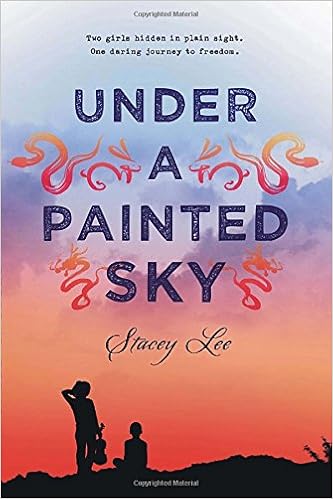
Book Recommendation: Under a Painted Sky

Summary: Missouri, 1849: Samantha dreams of moving back to New York to be a professional musician--not an easy thing if you're a girl, and harder still if you're Chinese. But a tragic accident dashes any hopes of fulfilling her dream, and instead, leaves her fearing for her life.
With the help of a runaway slave named Annamae, Samantha flees town for the unknown frontier. But life on the Oregon Trail is unsafe for two girls, so they disguise themselves as Sammy and Andy, two boys headed for the California gold rush.

Sammy and Andy forge a powerful bond as they each search for a link to their past, and struggle to avoid any unwanted attention. But when they cross paths with a band of cowboys, the light-hearted troupe turn out to be unexpected allies. With the law closing in on them and new setbacks coming each day, the girls quickly learn that there are not many places to hide on the open trail.


I'd heard about this book in passing on a list of Diverse YA Books, something I'm always interested in finding more of. When I found out that my local library had it, I thought, "Well, hey, why not?" and checked it out. Back at home, I started reading it...

...And fell in love.

This is one of those books that has everything I could ever possibly want in a novel. It's historical fiction! But with a diverse cast! The leads are teenaged girls of color! It's got a nice mix of humor and serious topics! The plot twists and turns and keeps you on your toes and the characters are wonderful and this is just a great book. I would highly recommend it.

I could just leave it at that, but let's break down why I'm so in love here.

The book is all from Samantha/Sammy's point of view, and she is definitely the most central character. She's unapolegetically Chinese, but she's also American--she was born in the U.S. to immigrant parents and has never known anywhere else. I really, really loved Sammy's narration, because it strikes a perfect balance as the words of someone who's sort of grown up in two worlds. Even so, she's relatable--as someone who hasn't been through a ton of hardship before the events of the book, she kind of allows the reader get acquainted with the Wild West at the same rate she does.

The rest of the characters aren't quite as fleshed out as Sammy, but they're very appreciable all the same. I especially appreciated Petey--actually, I just really loved the book's wholehearted acknowledgement of the fact that the inhabitants of the West during the cowboy/Gold Rush era were very diverse. You had all types of people: men, women, black people, white people, Mexicans, a ton of immigrants from everywhere from China to Ireland... Historical fiction is great, guys, and it gets better when the writer is willing to acknowledge that people of color existed in the past, too.

Besides having a diverse cast, the book has a solid, compelling story, and some great twists toward the end. There's also a little bit of romance, which isn't my cup of tea, but it's subdued enough that it didn't ruin the overall experience for me. Without giving too much away, the ending is bittersweet and gives you just enough closure, while still leaving it open for the characters to live the rest of their lives. And while the book doesn't shy away from serious topics and events, its tone never becomes too dark.

So, in conclusion, I greatly enjoyed this book and I would highly recommend it, particularly to anyone who enjoys historical fiction. If I end up doing another "Recommended Books of the Year" post this December, Under a Painted Sky by Stacey Lee will definitely be on it.

Gracias, y adiós!