I read quite a few books this year, in between school and writing and spending time with family. A lot of those books were amazing, the type of books that take hold of something in your soul. Looking back at the list, it's an odd combination of non-fiction and sci-fi/fantasy, with one lone exception. These are all books that deeply appealed to me in some way, whether that was the premise or the characters or the overall theme of the book. I would highly recommend them all.
***
1. Under a Painted Sky by Stacey Lee
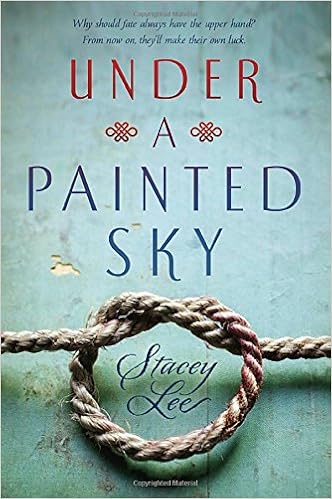 Summary: Missouri, 1849: Samantha dreams of moving back to New York to be a professional musician--not an easy thing if you're a girl, and harder still if you're Chinese. But a tragic accident dashes any hopes of fulfilling her dream, and instead, leaves her fearing for her life.
With the help of a runaway slave named Annamae, Samantha flees town for the unknown frontier. But life on the Oregon Trail is unsafe for two girls, so they disguise themselves as Sammy and Andy, two boys headed for the California gold rush.
Sammy and Andy forge a powerful bond as they each search for a link to their past, and struggle to avoid any unwanted attention. But when they cross paths with a band of cowboys, the light-hearted troupe turn out to be unexpected allies. With the law closing in on them and new setbacks coming each day, the girls quickly learn that there are not many places to hide on the open trail.
I read this book way back in February, and I absolutely adored it. In fact, it's pretty much the book that got me started doing book reviews on this blog. Once I read this book, I felt the need to share it with as many people as I possibly could. I've written a much longer review already, but to sum it up: this is a well-written book with amazing characters and an incredibly nuanced view of the Old West. I highly, highly recommend it.
2. Starflight by Melissa Landers
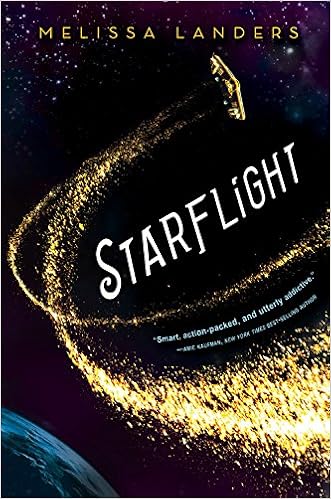 Summary: Solara Brooks needs a fresh start, someplace where nobody cares about the engine grease beneath her fingernails or the felony tattoos across her knuckles. The outer realm may be lawless, but it's not like the law has ever been on her side. Still, off-world travel doesn't come cheap; Solara is left with no choice but to indenture herself in exchange for passage to the outer realm. She just wishes it could have been to anyone besides Doran Spaulding, the rich, pretty-boy quarterback who made her life miserable in school.
The tables suddenly turn when Doran is framed for conspiracy on Earth, and Solara cons him into playing the role of her servant on board the Banshee, a ship manned by an eccentric crew with their own secrets. Given the price on both Doran and Solara's heads, it may just be the safest place in the universe. But when the Banshee's dangerous enemies catch up with them, Solara and Doran must come together to protect the ship that has become their home-and the eccentric crew that feels like family.
I read this book in about half a day. It's a fun, fast-moving little sci-fi story with fun characters and a plot that features plenty of twists and turns. It's not the best book I've ever read; and it's not deep and thought-provoking like Under a Painted Sky. But it's a book I greatly enjoyed, and it's the type of fun, inoffensive sci-fi fluff I like to read when my brain needs a break and I don't want to have to critique something too hard.
Summary: Solara Brooks needs a fresh start, someplace where nobody cares about the engine grease beneath her fingernails or the felony tattoos across her knuckles. The outer realm may be lawless, but it's not like the law has ever been on her side. Still, off-world travel doesn't come cheap; Solara is left with no choice but to indenture herself in exchange for passage to the outer realm. She just wishes it could have been to anyone besides Doran Spaulding, the rich, pretty-boy quarterback who made her life miserable in school.The tables suddenly turn when Doran is framed for conspiracy on Earth, and Solara cons him into playing the role of her servant on board the Banshee, a ship manned by an eccentric crew with their own secrets. Given the price on both Doran and Solara's heads, it may just be the safest place in the universe. But when the Banshee's dangerous enemies catch up with them, Solara and Doran must come together to protect the ship that has become their home-and the eccentric crew that feels like family.
I read this book in about half a day. It's a fun, fast-moving little sci-fi story with fun characters and a plot that features plenty of twists and turns. It's not the best book I've ever read; and it's not deep and thought-provoking like Under a Painted Sky. But it's a book I greatly enjoyed, and it's the type of fun, inoffensive sci-fi fluff I like to read when my brain needs a break and I don't want to have to critique something too hard.
3. Women Heroes of World War II by Kathryn J. Atwood
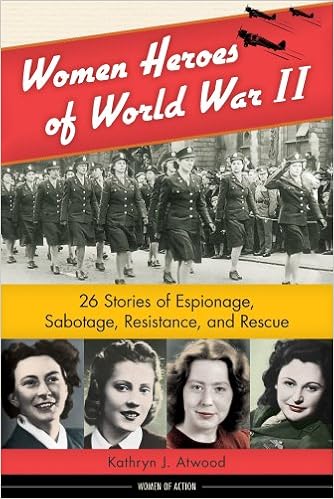 Summary: Noor Inayat Khan was the first female radio operator sent into occupied France and transferred crucial messages. Johtje Vos, a Dutch housewife, hid Jews in her home and repeatedly outsmarted the Gestapo. Law student Hannie Schaft became involved in the most dangerous resistance work--sabotage, weapons transference, and assassinations. In these pages, young readers will meet these and many other similarly courageous women and girls who risked their lives to help defeat the Nazis.
Twenty-six engaging and suspense-filled stories unfold from across Germany, Poland, the Netherlands, France, Belgium, Denmark, Great Britain, and the United States, providing an inspiring reminder of women and girls’ refusal to sit on the sidelines around the world and throughout history.
I first encountered this book while volunteering at my local library. It seemed like the type of book I would like, so I checked it out and started reading. And just as I'd suspected, I loved it. This book tells the story of a variety of female heroes during World War II, most of whom are rarely taught about elsewhere. It doesn't restrict itself to any one type of hero, either. Included are women who fought the Nazis nonviolently, like Sophie Scholl and Johtie Vos, and much more literal fighters like Hannie Schaft. Women of color are included in the stories of Noor Inayat Khan and Josephine Baker. The faith and religon that inspired many of these women, such as Corrie ten Boom, isn't overlooked. Each story is concise yet important. This book really is an important reminder of women who were not afraid to do what they knew was right, even in the face of death.
Summary: Noor Inayat Khan was the first female radio operator sent into occupied France and transferred crucial messages. Johtje Vos, a Dutch housewife, hid Jews in her home and repeatedly outsmarted the Gestapo. Law student Hannie Schaft became involved in the most dangerous resistance work--sabotage, weapons transference, and assassinations. In these pages, young readers will meet these and many other similarly courageous women and girls who risked their lives to help defeat the Nazis.Twenty-six engaging and suspense-filled stories unfold from across Germany, Poland, the Netherlands, France, Belgium, Denmark, Great Britain, and the United States, providing an inspiring reminder of women and girls’ refusal to sit on the sidelines around the world and throughout history.
I first encountered this book while volunteering at my local library. It seemed like the type of book I would like, so I checked it out and started reading. And just as I'd suspected, I loved it. This book tells the story of a variety of female heroes during World War II, most of whom are rarely taught about elsewhere. It doesn't restrict itself to any one type of hero, either. Included are women who fought the Nazis nonviolently, like Sophie Scholl and Johtie Vos, and much more literal fighters like Hannie Schaft. Women of color are included in the stories of Noor Inayat Khan and Josephine Baker. The faith and religon that inspired many of these women, such as Corrie ten Boom, isn't overlooked. Each story is concise yet important. This book really is an important reminder of women who were not afraid to do what they knew was right, even in the face of death.
4. Failures of the Presidents by Thomas J. Craughwell and M. William Phelps
 Summary: In an effort to put an end to Britain and France’s policy of seizing American ships and sailors, Thomas Jefferson calls for an embargo. The result: 30,000 soldiers out of work, mercantile families bankrupted, and a nationwide economic depression.
In an effort to install a capitalist government in the Middle East, stabilize the region, and protect America from a possible Iraqi terrorist assault using weapons of mass destruction, George W. Bush orders the invasion of Iraq. The result: More than 4,000 American soldiers and personnel dead; estimated hundreds of thousands of Iraqi civilians dead; hundreds of billions of dollars spent; the torture of prisoners in the Abu Ghraib prison and the failure to find weapons of mass destruction leave American global credibility in tatters.
What were they thinking?
Summary: In an effort to put an end to Britain and France’s policy of seizing American ships and sailors, Thomas Jefferson calls for an embargo. The result: 30,000 soldiers out of work, mercantile families bankrupted, and a nationwide economic depression.In an effort to install a capitalist government in the Middle East, stabilize the region, and protect America from a possible Iraqi terrorist assault using weapons of mass destruction, George W. Bush orders the invasion of Iraq. The result: More than 4,000 American soldiers and personnel dead; estimated hundreds of thousands of Iraqi civilians dead; hundreds of billions of dollars spent; the torture of prisoners in the Abu Ghraib prison and the failure to find weapons of mass destruction leave American global credibility in tatters.
What were they thinking?
One of my favorite genres of history, so to speak, is the "American history they didn't teach you in school" genre. This book appeals very heavily to that interest of mine, as it not only explores little-known anecdotes from history, but calls attention to the flaws of most U.S. presidents. It's a fairly unbiased book that provides cultural and historical context for the presidents' various decisions, without absolving them of the consequences. This is the kind of history I very much appreciate.
5. On Basilisk Station by David Weber
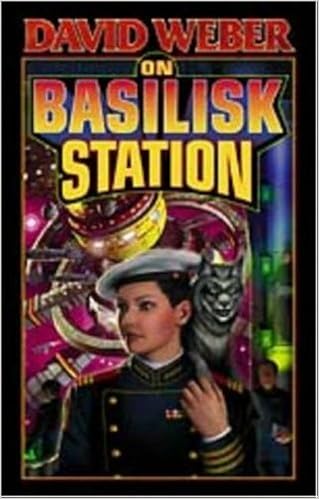 Summary: Having made him look a fool, she's been exiled to Basilisk Station in disgrace and set up for ruin by a superior who hates her. Her demoralized crew blames her for their ship's humiliating posting to an out-of-the-way picket station. The aborigines of the system's only habitable planet are smoking homicide-inducing hallucinogens. Parliament isn't sure it wants to keep the place; the major local industry is smuggling; the merchant cartels want her head; the star-conquering, so-called "Republic" of Haven is Up To Something; and Honor Harrington has a single, over-age light cruiser with an armament that doesn't work to police the entire star system.
But the people out to get her have made one mistake. They've made her mad.
This is another book I've already done a full review for, back when I read a bunch of SF novels over the summer. I enjoyed it pretty thoroughly, since it takes the story of the "misunderstood military genius" and gives it to a female protagonist. It's well-written and the story moves just fast enough. I've heard that this series (the Honor Harrington series) is based off of the Horatio Hornblower books, and it does seem that way, but the books are different enough, in genre and in writing, that they don't come off as too similar. I look forward to reading the next book, whenever I can find it.
Summary: Having made him look a fool, she's been exiled to Basilisk Station in disgrace and set up for ruin by a superior who hates her. Her demoralized crew blames her for their ship's humiliating posting to an out-of-the-way picket station. The aborigines of the system's only habitable planet are smoking homicide-inducing hallucinogens. Parliament isn't sure it wants to keep the place; the major local industry is smuggling; the merchant cartels want her head; the star-conquering, so-called "Republic" of Haven is Up To Something; and Honor Harrington has a single, over-age light cruiser with an armament that doesn't work to police the entire star system. But the people out to get her have made one mistake. They've made her mad.
This is another book I've already done a full review for, back when I read a bunch of SF novels over the summer. I enjoyed it pretty thoroughly, since it takes the story of the "misunderstood military genius" and gives it to a female protagonist. It's well-written and the story moves just fast enough. I've heard that this series (the Honor Harrington series) is based off of the Horatio Hornblower books, and it does seem that way, but the books are different enough, in genre and in writing, that they don't come off as too similar. I look forward to reading the next book, whenever I can find it.
6. Steelheart by Brandon Sanderson
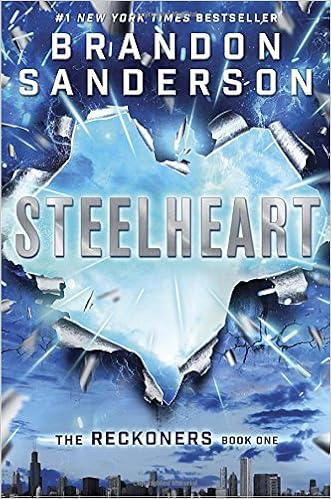 Summary: How far would you go for revenge if someone killed your father? If someone destroyed your city? If everything you ever loved was taken from you?
David Charleston will go to any lengths to stop Steelheart. But to exact revenge in Steelheart’s world, David will need the Reckoners—a shadowy group of rebels bent on maintaining justice.
And it turns out that the Reckoners might just need David too.
This is yet another book that I've previously reviewed on this blog. Again, see that post for my complete thoughts. To make a long(ish) review short, well... This is a book with a very unique perspective on superheroes. It turns genre conventions upside down and tells a heartfelt, enthralling story, and the whole thing is very well-written. As a side note, the sequels are just as good. I'd recommend the whole Reckoners trilogy, which stems from this book; but even as a standalone, Steelheart is awesome, and comes highly recommended by me.
Summary: How far would you go for revenge if someone killed your father? If someone destroyed your city? If everything you ever loved was taken from you?David Charleston will go to any lengths to stop Steelheart. But to exact revenge in Steelheart’s world, David will need the Reckoners—a shadowy group of rebels bent on maintaining justice.
And it turns out that the Reckoners might just need David too.
This is yet another book that I've previously reviewed on this blog. Again, see that post for my complete thoughts. To make a long(ish) review short, well... This is a book with a very unique perspective on superheroes. It turns genre conventions upside down and tells a heartfelt, enthralling story, and the whole thing is very well-written. As a side note, the sequels are just as good. I'd recommend the whole Reckoners trilogy, which stems from this book; but even as a standalone, Steelheart is awesome, and comes highly recommended by me.
7. War of the Worlds by H.G. Wells
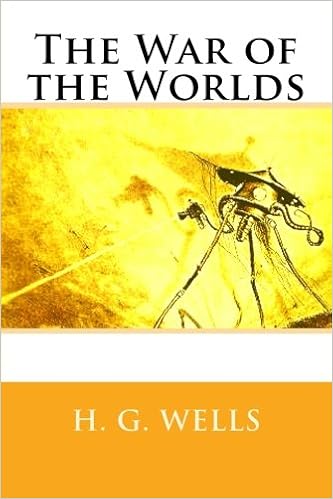 Summary: After Martians invade Earth—specifically, England—a philosophically-inclined writer is set on a journey across the ravaged English countryside as he attempts to find his wife and, with luck, avoid death.
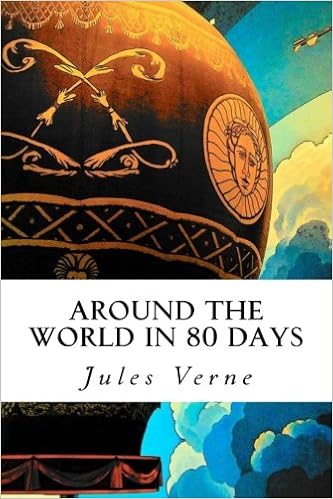
This is this year's obligatory really old, yet surprisingly good novel (last year's was Jules Verne's Around the World in Eighty Days). First published in 1898, War of the Worlds is thought to be the first mainstream alien invasion story, and besides being groundbreaking science fiction, it also carries some scintillating social commentary. It isn't as exciting or fast-moving as modern sci-fi, but it still carries its fair share of action. The best part of the novel, though—at least in my opinion—is the atmosphere Wells creates with words alone. The scenarios presented in the novel, the hopelessness and fear, were mildly terrifying even to me. They're even sharper when you think of how nineteenth- and twentieth-century readers must have perceived the story. All of Wells's fiction was based on real science of his day, after all.
Summary: After Martians invade Earth—specifically, England—a philosophically-inclined writer is set on a journey across the ravaged English countryside as he attempts to find his wife and, with luck, avoid death. This is this year's obligatory really old, yet surprisingly good novel (last year's was Jules Verne's Around the World in Eighty Days). First published in 1898, War of the Worlds is thought to be the first mainstream alien invasion story, and besides being groundbreaking science fiction, it also carries some scintillating social commentary. It isn't as exciting or fast-moving as modern sci-fi, but it still carries its fair share of action. The best part of the novel, though—at least in my opinion—is the atmosphere Wells creates with words alone. The scenarios presented in the novel, the hopelessness and fear, were mildly terrifying even to me. They're even sharper when you think of how nineteenth- and twentieth-century readers must have perceived the story. All of Wells's fiction was based on real science of his day, after all.
***
So there you have it: seven books I read this year and loved. I'd recommend all of them, especially if you're a fan of science fiction or history. Even if you're not, these are still, in my opinion, valuable books. If you've read any of these or end up reading them in the coming year, I'd love to discuss them. Until then, Feliz Navidad, Happy Holidays, and a Happy New Year